You Won’t Believe What I Found at Pamukkale’s Hidden Terraces
Nestled in southwestern Turkey, Pamukkale’s white travertine pools glow like a surreal dream carved by nature and time. Most visitors stick to the main paths, but few know about the quiet coves and warm springs just off the beaten trail. I stumbled upon these secret spots by chance—and what I experienced changed how I see travel forever. This is not just a sightseeing trip; it’s a journey into the heart of something truly magical. The soft murmur of flowing water, the warmth beneath bare feet, the way morning light kisses the limestone—it all comes together in a moment of rare stillness. For those willing to look beyond the postcard views, Pamukkale offers a deeper connection to earth, history, and self.
The First Glimpse: Arriving at a Natural Wonderland
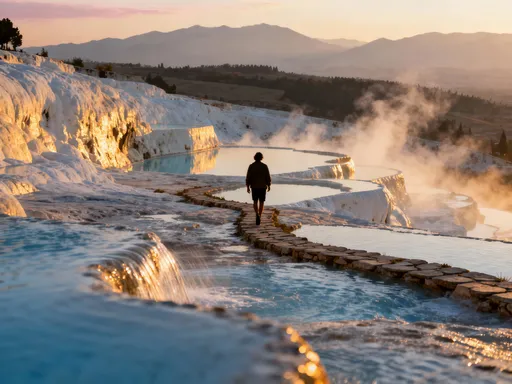
As the sun rises over the Denizli Province, Pamukkale begins to awaken in hues of pearl and blush. The first sight of the terraced hills takes the breath away—layers of white calcium carbonate cascade down the slope like frozen waterfalls, glistening under the early light. Each step along the mineral-rich paths reveals new textures: smooth, rippled surfaces formed by centuries of flowing thermal water, cool to the touch yet warmed from below by geothermal energy. This natural phenomenon occurs as rainwater seeps deep into the earth, absorbing minerals from limestone formations before rising again through faults, cooled just enough to deposit calcium carbonate upon reaching the surface. Over thousands of years, this slow dance between water and rock has built the dazzling terraces seen today.
While most tourists gather at the upper terraces—drawn by the iconic shallow pools perfect for wading—few venture into the lower reaches where the landscape becomes wilder, quieter, more intimate. These areas are less manicured, with uneven edges and natural runoffs creating secluded basins that shimmer in the sunlight. The contrast between the crowded main walkways and these hidden corners could not be starker. One moment you're surrounded by the chatter of tour groups and camera clicks; the next, you're alone with the whisper of water slipping over stone. It is here, away from the guidebooks and marked trails, that Pamukkale reveals its soul—not as a spectacle, but as a living, breathing landscape shaped by time and elemental forces.
Arriving early allows travelers to witness the site before the day heats up and the crowds pour in. The morning air carries a crisp freshness, and the light casts long shadows across the terraces, enhancing their sculptural beauty. For many, this first glimpse is not just visual—it’s emotional. There’s a sense of stepping into another world, one where nature has written its own architecture. Understanding the geological process adds depth to the awe, transforming wonder into reverence. Pamukkale is not merely beautiful; it is a testament to Earth’s quiet, persistent creativity—a reminder that some of the most extraordinary places are born not in moments, but across millennia.
Beyond the Postcard: Discovering the Underrated Side of Hierapolis
Perched above the dazzling terraces lies the ancient city of Hierapolis, a Greco-Roman settlement founded in the 2nd century BCE. While many visitors focus solely on the natural wonders below, they often overlook the rich historical tapestry woven into the ruins above. Walking through Hierapolis feels like moving through layers of time—the cracked marble columns, the weathered inscriptions, the grand outlines of public baths and temples all speak of a once-thriving center of culture and healing. The city was built as a sanctuary dedicated to Apollo, later becoming a famed spa destination where people came to bathe in the same mineral waters that formed the travertines. Today, its ruins stand as a silent echo of that past, inviting exploration beyond the usual tourist circuit.
One of the most moving experiences is sitting in the ancient theater, still remarkably intact, as the sun begins to dip below the horizon. With few others around, it’s easy to close your eyes and imagine the sounds of an audience gathered 2,000 years ago—laughter, applause, the resonance of actors’ voices carried on the evening breeze. The theater once held over 15,000 spectators and served as a hub for political and cultural life. Nearby, the necropolis stretches out like a stone forest, with tombs of various styles reflecting the city’s diverse population—Greek, Roman, and Anatolian influences all present in the carvings and inscriptions. These silent sentinels tell stories of families, soldiers, and merchants who once called this place home.
What makes Hierapolis so compelling is how seamlessly it blends with the natural environment. Roman engineers channeled the thermal waters into elaborate bath complexes, using advanced plumbing systems that were centuries ahead of their time. The ruins of these baths, now open to exploration, reveal intricate mosaic floors and vaulted ceilings, hinting at the luxury that once defined this retreat. Olive trees grow through cracked flagstones, their gnarled roots intertwining with ancient masonry, creating a poetic fusion of nature reclaiming history. For the thoughtful traveler, exploring Hierapolis isn’t just about sightseeing—it’s about connecting with the human stories behind the stones, understanding how people lived, healed, and celebrated in harmony with the land.
Taking time to wander beyond the main attractions allows for moments of discovery that no guided tour can promise. A hidden archway leads to a quiet courtyard; a side path reveals a partially restored temple dedicated to Isis. These quiet encounters enrich the journey, turning a visit to Pamukkale into a multidimensional experience. The combination of natural wonder and historical depth creates a rare synergy—one that lingers in memory long after the trip ends. To see only the terraces is to glimpse half the story. To walk among the ruins of Hierapolis is to understand why this place has drawn pilgrims, healers, and travelers for over two millennia.
The Secret Morning Ritual: Soaking in Hidden Warm Pools
Long before Pamukkale became a UNESCO World Heritage Site, locals knew the healing power of its thermal waters. Tucked away from the main tourist zones are natural pools fed directly by underground springs, where the water maintains a soothing temperature between 35°C and 38°C (95°F–100°F). These hidden spots, often nestled in groves or tucked behind rocky outcrops, offer a more private and authentic soaking experience. I discovered one by following a narrow dirt path just beyond the edge of the official park boundary, where steam rose gently from a basin surrounded by reeds and wildflowers. The silence was profound—only the soft lap of water and the distant call of a bird broke the stillness.
Slipping into the warm embrace of the pool felt almost sacred. The mineral-rich water, laden with calcium, magnesium, and bicarbonate, instantly eased the tension in muscles and joints. For centuries, these waters have been believed to aid circulation, relieve arthritis, and improve skin conditions. While modern science supports some of these benefits—particularly for dermatological and rheumatic conditions—the true magic lies in the ritual itself: slowing down, breathing deeply, and allowing the body to simply be. There’s a meditative quality to soaking in such a place, especially at dawn when the world feels untouched and pure.
For those seeking this experience, timing and preparation are essential. The best hours are between 6:00 and 8:00 a.m., when temperatures are cooler and most visitors have yet to arrive. Wearing a swimsuit is advisable, though some locals bathe in clothing, respecting personal or cultural preferences. Towels and water shoes are recommended, as the surrounding terrain can be slippery. It’s important to note that swimming is prohibited in the main travertine terraces to protect the delicate formations, but these off-trail pools fall outside regulated zones and are used naturally by residents. Visitors should always respect local customs, avoid loud noises, and leave no trace of their presence.
Finding these hidden pools requires curiosity and a willingness to ask questions. A friendly conversation with a local vendor or a knowledgeable driver often yields the best leads. One elderly woman selling herbal teas near the entrance pointed me toward a path few tourists take, saying simply, “The real warmth is where the people go.” That advice led to one of the most peaceful mornings of my life—a moment of quiet communion with nature, far from the curated paths and photo ops. In a world that often feels rushed and artificial, such experiences are priceless.
Off the Beaten Path: Hiking the Less-Traveled Trails
While the main boardwalks guide millions safely across the terraces, the true magic of Pamukkale unfolds when you step off the paved routes and onto the lesser-known footpaths that weave through the surrounding hills. These trails, often unmarked or lightly maintained, offer access to secluded vantage points where the entire valley spreads out like a living canvas. One such route begins near the eastern edge of the site, where a narrow switchback trail climbs through scrubland dotted with wild thyme and rockrose. As elevation increases, the sounds of the park fade, replaced by the rustle of lizards darting between stones and the occasional buzz of a bee hovering over blooming herbs.
The terrain varies from smooth limestone slabs to uneven rocky steps, requiring sturdy footwear and steady footing. Some sections are shaded by olive and fig trees, offering relief from the midday sun, while others open into panoramic clearings with uninterrupted views of the terraces below. From these heights, the scale of Pamukkale becomes fully apparent—the way the white formations ripple across the hillside like waves frozen in time, intersected by threads of blue water. On clear days, the distant peaks of the Babadag Mountain range form a hazy backdrop, completing a vista that feels untouched by modernity.
Hiking these trails rewards patience and presence. There are no souvenir stands, no loudspeakers, no queues—just the rhythm of your breath and the crunch of gravel beneath your shoes. Photographers will appreciate the lighting during early morning or late afternoon, when the low sun casts golden tones across the calcium deposits, enhancing contrast and texture. For those seeking solitude, these paths provide rare opportunities to experience nature without distraction. One particularly serene spot is a natural overlook shaped like a horseshoe, where a single bench has been placed by local conservationists. Sitting there, with the wind gently lifting your hair and the silence wrapping around you, creates a moment of profound clarity.
Safety remains important when exploring off-trail areas. Carrying water, wearing a hat, and applying sunscreen are essential, especially during the warmer months. Sticking to visible paths helps prevent erosion and protects fragile vegetation. Some routes may not be officially endorsed, so checking with park rangers or local guides beforehand ensures both safety and respect for environmental regulations. The reward for this extra effort is immeasurable: a deeper connection to the land, a sense of discovery, and memories that feel uniquely personal. In a place as famous as Pamukkale, finding true solitude is a gift—one that reminds us why we travel in the first place.
A Taste of Authenticity: Eating Like a Local in Nearby Villages
Just a short drive from the main entrance of Pamukkale lie small villages where life unfolds at a gentler pace. In places like Karahayit and Denizli, family-run eateries serve meals prepared with ingredients sourced from nearby farms—fresh goat cheese, sun-ripened tomatoes, fragrant herbs, and warm, crusty bread baked in wood-fired ovens. These modest restaurants, often little more than a few tables under a grape arbor, offer a culinary experience far removed from the generic menus of tourist cafes. One afternoon, I followed the scent of grilled meat to a small courtyard where an elderly couple welcomed me with steaming bowls of *mantı*—tiny dumplings filled with spiced lamb, topped with yogurt, sumac, and a drizzle of melted butter infused with paprika.
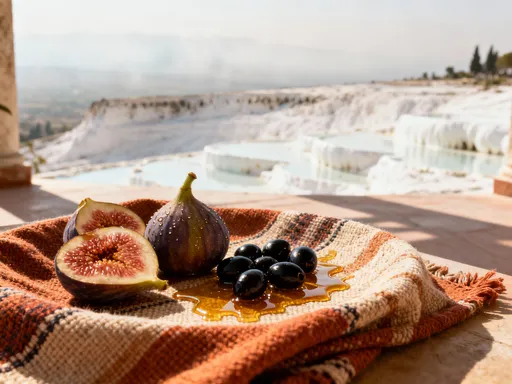
Sharing a meal in such settings is more than nourishment—it’s an invitation into daily life. The woman who served me spoke little English but smiled warmly as she refilled my glass with mint tea, poured from a height to create a frothy top, a traditional gesture of hospitality. Her husband pointed to a fig tree in the corner, then brought out a plate of fresh figs still warm from the sun. Conversation flowed through gestures, laughter, and shared enjoyment of food. There was no menu, no rush—just the unhurried rhythm of a home-cooked meal offered with pride.
These moments of connection transform a simple stop into a meaningful encounter. Turkish cuisine, especially in rural areas, is deeply tied to the seasons and the land. In spring, wild greens like *madımak* are gathered for pies; in summer, melons and cucumbers appear in every dish; in autumn, grapes are pressed for molasses and wine. Meals are often communal, emphasizing generosity and togetherness. For travelers, embracing this way of eating means stepping outside the familiar and opening up to new flavors and traditions. It also supports local economies in the most direct way—every lira spent goes to the hands that grew, cooked, and served the food.
To find these authentic spots, it helps to ask locals for recommendations. Drivers, hotel staff, or even shopkeepers often know the best-hidden gems. One taxi driver took me to a village kitchen where women prepared *yaprak sarma*—grape leaves stuffed with rice and herbs—on large communal tables. Another guide suggested a breakfast spot famous for its honeycomb, served with clotted cream and walnuts. These experiences, built on trust and warmth, become the heart of a journey. They remind us that travel is not just about seeing new places, but about tasting, smelling, and feeling them—with all the senses engaged and the heart open.
Timing Is Everything: Why Sunset Changes the Game
The light at Pamukkale changes everything. During midday, the terraces shine with a brilliant, almost blinding whiteness, reflecting the sun’s intensity. But as afternoon deepens into evening, a transformation begins. The white calcium turns soft gold, then blushes into delicate pinks and apricots as the sun sinks toward the horizon. This golden hour, lasting just thirty to forty minutes, casts a warm glow across the entire landscape, softening edges and deepening shadows. It is during this time that the terraces feel most alive—not as a geological curiosity, but as a living canvas painted by light and water.
Visiting during sunset offers practical advantages as well. The heat of the day begins to fade, making walking more comfortable. Crowds thin out as tour buses depart, leaving behind a sense of peace and stillness. Some accommodations near the site allow guests to re-enter after official closing hours through special arrangements, offering rare access to the terraces in near-solitude. Even without special access, arriving late in the day ensures a more relaxed experience, with fewer people and better photo opportunities. The shift in atmosphere is palpable—what was once a bustling attraction becomes a place of quiet contemplation.
For those who stay overnight, the experience deepens further. Waking before sunrise allows a return to the terraces in complete silence, when mist rises from the pools and the first rays of light trace the contours of the hills. This early visit, though requiring effort, offers one of the most serene experiences possible. The combination of cool air, soft light, and utter quiet creates a meditative space where thoughts slow and the soul settles. It’s in these moments—between darkness and dawn—that Pamukkale feels most sacred.
Understanding the rhythm of light and crowd patterns empowers travelers to shape their own experience. Rather than following the standard itinerary, those who adjust their timing gain something far more valuable: intimacy with the place. Whether it’s the golden warmth of sunset or the hushed purity of sunrise, these fleeting windows offer a different kind of sightseeing—one rooted in feeling rather than observation. And in a world where so much travel feels rushed and performative, such moments of stillness are a rare and precious gift.
Traveling with Respect: Preserving the Magic for Others
With every hidden path discovered and every quiet pool enjoyed, comes a quiet responsibility—the duty to protect what makes Pamukkale so special. The travertine formations are fragile, built over millennia yet vulnerable to damage in moments. This is why rules exist: no shoes on the terraces, no swimming in protected areas, no stepping outside designated paths. These guidelines are not arbitrary; they are essential to preserving the site’s integrity. The calcium deposits are soft and easily scarred by footsteps, while oils from skin and fabric can disrupt the delicate mineral balance needed for continued growth.
Tourism has brought both benefits and challenges to Pamukkale. On one hand, it funds conservation efforts and supports local communities. On the other, increased foot traffic and improper behavior threaten the very beauty people come to see. In the past, unregulated development led to hotels being built directly on the terraces, causing irreversible damage. Today, strict protections are in place, and the site has undergone significant restoration. But preservation depends not just on policy—it depends on each visitor’s choices.
Mindful travel means carrying out all trash, avoiding single-use plastics, and respecting signage. It means choosing eco-friendly accommodations and supporting businesses committed to sustainability. It means sharing stories without revealing exact locations of hidden spots, protecting them from overuse. And it means teaching children and companions to value silence, stillness, and stewardship. When we travel with care, we become part of the solution rather than the problem.
Pamukkale is more than a destination—it is a reminder of nature’s quiet artistry and the importance of protecting it. The joy of discovering its hidden corners should be matched by the commitment to keep them pristine. By traveling with respect, we ensure that future generations can also stand barefoot on warm stone, gaze across glowing terraces, and feel the deep peace that comes from being present in one of Earth’s most extraordinary places. The magic of Pamukkale is not in being seen, but in being felt—and that feeling is worth preserving, one careful step at a time.