Where Art Meets Nature in Luxembourg City – You Won’t Believe This Urban Escape
Who knew a tiny European capital could pack such a punch? Luxembourg City blends dramatic cliffs, winding rivers, and lush green spaces with artistic flair you can feel in your bones. I wandered its trails and alleyways, stunned by how nature and creativity coexist so effortlessly. This isn’t just a city with parks—nature is the canvas. From open-air sculptures nestled in forests to graffiti that mirrors canyon walls, every turn feels intentional, alive. What emerges is not a curated museum of art or a preserved wilderness, but a living dialogue between human expression and the natural world. In Luxembourg City, art does not interrupt the landscape; it completes it.
First Impressions: A City Carved by Nature and Design
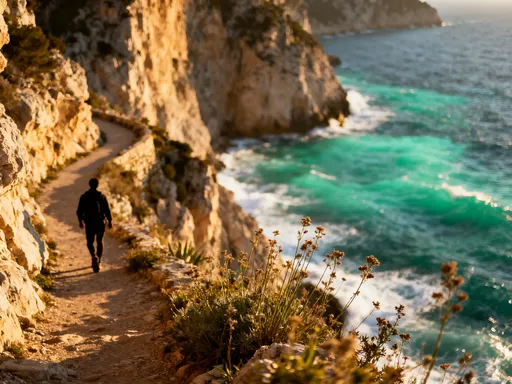
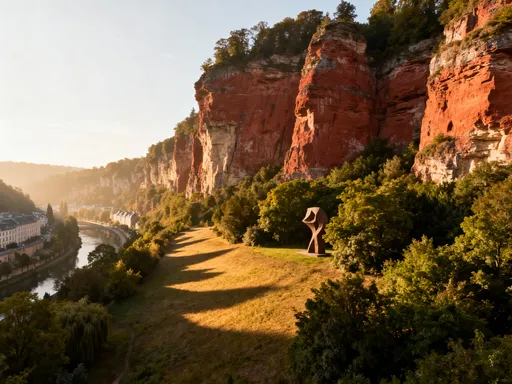
Luxembourg City’s geography is nothing short of dramatic. Nestled within the deep Alzette Valley, the city rises and falls along red sandstone cliffs that have been shaped by centuries of wind, water, and time. These natural formations are not obstacles to development—they are the foundation upon which the city is built. As visitors descend from the Plateau du Saint-Esprit toward the old town, they pass over arched stone bridges and through tree-lined pathways that follow the valley’s organic curves. The city’s infrastructure does not fight the terrain; it embraces it. Streets curve like tributaries, staircases cut into rock faces, and buildings perch on ledges as if grown from the earth itself.
This harmony between built and natural environments sets the stage for the artistic experience that unfolds throughout the city. Even before reaching the first designated art installation, travelers encounter subtle creative touches—carved stone inscriptions along footpaths, iron railings shaped like vines, and benches sculpted to mirror the flow of the river below. These elements are not mere decoration; they signal a deeper philosophy. Public art here is not an afterthought but a thread woven into the city’s identity. The integration is so seamless that one might not immediately recognize it as art—until a particular angle of light reveals a poem embedded in pavement or a shadow aligns perfectly with a metal silhouette on a cliffside.
What makes Luxembourg City’s approach unique is its restraint. Unlike capitals that showcase monumental statues or flashy installations, this city favors understatement. Art emerges quietly, inviting contemplation rather than demanding attention. A bronze leaf embedded in a stone wall, a single line of poetry etched into a bridge support—these gestures honor the landscape without overpowering it. For visitors, especially those accustomed to urban environments where nature is often paved over, this balance feels revolutionary. It suggests that cities do not have to conquer nature to be vibrant. They can grow with it, learn from it, and even sing through it.
The Pétrusse and Alzette Valleys: Nature’s Open-Air Gallery
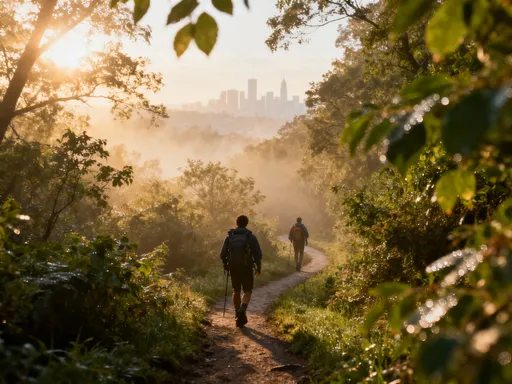
The Pétrusse and Alzette rivers carve through Luxembourg City like veins, feeding its green spaces and framing its most iconic views. But beyond their scenic beauty, these valleys function as open-air galleries where nature and art engage in a continuous conversation. Along the Chemin de la Liberté, a walking trail that traces the Pétrusse Valley, hikers encounter a series of subtle artistic interventions. Steel plaques set into the path bear fragments of poetry in Luxembourgish, French, and German—languages that reflect the city’s multicultural soul. The verses speak of time, memory, and transformation, themes that resonate with the ever-changing light filtering through the trees and the slow erosion of sandstone walls.
Further along the route, minimalist sculptures appear like quiet sentinels among the foliage. One, a slender loop of weathered steel, frames a distant church spire as if placing it within a living painting. Another, a cluster of mirrored discs suspended between trees, catches glimmers of sunlight and reflects the canopy in fragmented pieces, evoking the way memory distorts and preserves moments. These installations are not meant to dominate the landscape. Instead, they enhance perception, encouraging visitors to slow down, observe, and reflect. The art does not shout; it whispers, and in doing so, it deepens the experience of being present in nature.
What stands out in these valleys is the way artists respond to the environment rather than impose upon it. A sculptor might choose a rock formation as a natural pedestal, or a poet might time a sound installation to coincide with the rush of spring runoff. The materials used—reclaimed metal, local stone, sustainably sourced wood—further reinforce the connection to place. Even the placement of artworks considers seasonal shifts: a piece visible in winter when leaves are bare may disappear in summer, reemerging only when conditions change. This transience mirrors the cycles of nature itself, reminding viewers that beauty is not static but evolving.
For families and solo travelers alike, these trails offer more than exercise or sightseeing. They provide moments of quiet awe, where the line between art and environment blurs. Children might crouch to read a poem at ground level, while adults pause to photograph the way a sculpture aligns with a sunset. These experiences are not orchestrated for social media—they are invitations to connect, not just with art, but with the earth and with oneself.
Luxembourg’s Green Lungs: Parks as Curated Landscapes
Parc Merl and Parc Municipal are more than recreational spaces—they are living examples of how urban parks can be both ecologically responsible and artistically rich. Parc Merl, with its meandering paths, tranquil ponds, and century-old trees, feels like a secret garden tucked within the city. Yet within its natural beauty lie carefully placed artistic elements. A stone amphitheater hosts summer concerts, its curved steps doubling as seating and sculpture. Nearby, seasonal installations—a woven willow dome, a kinetic wind sculpture—appear for a few months before being replaced, ensuring the park never feels stagnant.
Parc Municipal, located near the city center, takes a more formal approach, with geometric flowerbeds and manicured lawns. But even here, creativity finds a voice. Temporary art displays, often created by local schools or community groups, dot the landscape during spring and autumn. One summer featured a series of painted boulders, each illustrating a different native species, from the European hedgehog to the black woodpecker. These projects do more than beautify; they educate, fostering awareness of local biodiversity. Children learn about wildlife through art, while adults appreciate the blend of aesthetics and environmental stewardship.
Urban planning plays a crucial role in maintaining this balance. The city’s green spaces are designed with biodiversity in mind—native plants are prioritized, pollinator habitats are protected, and water features support amphibians and insects. At the same time, artists are invited to respond to these ecological frameworks. A recent project involved embedding solar-powered LED lights into fallen logs, creating a gentle glow at dusk that mimics fireflies without disrupting nocturnal animals. Such innovations demonstrate that art and ecology need not be at odds. When thoughtfully integrated, they can amplify each other.
For residents, these parks are sanctuaries. Morning joggers wave to gardeners; retirees read beneath shaded benches; families picnic on weekends. The presence of art enhances these routines without interrupting them. A sculpture becomes a meeting point; a poem carved into a bench offers a moment of reflection. In this way, art becomes part of daily life, not something confined to galleries or special occasions. It is accessible, inclusive, and ever-present—just like the air we breathe.
The Bock and Corniche: Where History, Nature, and Art Collide
The Corniche, often called “the most beautiful promenade in Europe,” offers a panoramic view that feels almost cinematic. Lined with chestnut trees and flanked by sheer rock faces, this pathway stretches along the edge of the Alzette Valley, providing sweeping vistas of red-roofed buildings, arched bridges, and the river winding below. But the Corniche is more than a viewpoint—it is a curated experience, where every angle seems composed like a painting. Benches are placed at intervals to encourage pause and contemplation, and subtle engravings in stone railings quote poets who once wandered the same path.
Nearby, the Bock Casemates—a network of tunnels carved into the sandstone cliffs—add a layer of historical depth. Originally built as fortifications, these underground passages now serve as a bridge between past and present. While the casemates themselves are preserved as a historical site, the surrounding cliffs have become an unexpected canvas for artistic expression. During the annual Festival d’Art Urbain, light projections transform the rock faces into moving murals, depicting scenes of resilience, migration, and renewal. Sound installations echo through the tunnels, blending military drumbeats with bird songs and flowing water—a reminder that even places of conflict can be reclaimed by nature and creativity.
The fusion of history, geology, and art here is profound. The cliffs, worn by time and weather, resemble ancient sculptures. Artists respond to this natural artistry with works that honor rather than imitate. A steel frame installed at the edge of the Bock overlooks the valley, its lines echoing the arches of the Adolphe Bridge below. It does not compete with the view; it frames it, drawing attention to the harmony between human engineering and natural form. For visitors, standing at this intersection of time and space, the experience is both grounding and uplifting—a reminder that beauty endures, even in places shaped by struggle.
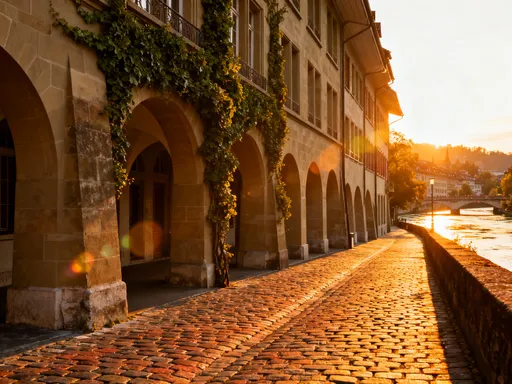
Walking the Corniche at sunset, one can see how light transforms the city. The red sandstone glows like embers, the river reflects the sky, and the distant hum of the city blends with the rustle of leaves. It is in these quiet moments that the true magic of Luxembourg City reveals itself—not in grand gestures, but in the delicate balance of elements that come together to create something greater than the sum of its parts.
Off-the-Beaten-Path: Hidden Natural-Art Encounters
Beyond the well-trodden trails lie quieter corners of Luxembourg City, where nature feels wilder and art more intimate. The Rham Plateau, less visited than the Corniche, offers expansive views without the crowds. Here, a mosaic set into a forest clearing catches the morning light, its tiles forming a pattern inspired by lichen growth on stone. It is easy to miss—intentionally so. The artwork does not announce itself; it waits to be discovered, rewarding those who wander off the main path.
Along the Ulflingen trail, near the border of the city’s green belt, a series of small interventions invite reflection. A mirror installation, tilted toward the treetops, allows hikers to see the forest canopy from a new perspective—upside down, fragmented, dreamlike. Nearby, a stone bears a single line of poetry: “Time listens where the river bends.” These moments are not staged for photographs; they are meant to be felt. They encourage slowness, presence, and a deeper connection to place.
For travelers seeking solitude, timing is key. Early mornings on weekends or weekday afternoons offer the best chance to experience these spaces without distraction. Local maps, available at tourist centers or online, highlight eco-sensitive zones where visitors are encouraged to stay on marked paths and avoid disturbing wildlife. The city promotes sustainable visitation through clear signage and community outreach, ensuring that art and nature remain protected for future generations.
What makes these hidden encounters so powerful is their authenticity. They are not designed for virality or spectacle. They exist because artists and planners believe in the value of quiet beauty, of moments that cannot be rushed or replicated. For mothers walking with children, for retirees seeking peace, for anyone needing a pause from the pace of modern life, these spaces offer something rare: the chance to breathe, to notice, to be.
Art in the Wild: How Luxembourg Celebrates Nature Through Creativity
Luxembourg City’s commitment to blending art and nature is most visible during its annual cultural events. The Festival d’Art Urbain brings together local and international artists who create site-specific works in parks, valleys, and forgotten corners of the city. Unlike traditional art festivals held in galleries, this event takes place entirely outdoors, with pieces designed to interact with wind, light, and weather. One year, an artist suspended hundreds of translucent ribbons between trees, their movement mimicking the flow of the Alzette. Another installed a series of wind chimes made from recycled metal, their tones changing with the season.
Another notable initiative, Naturels Passages, invites artists to respond directly to natural sites. A composer might record the sounds of the Pétrusse Valley and turn them into a symphony; a visual artist might use soil pigments to paint on biodegradable fabric. These projects emphasize impermanence and sustainability, reflecting a broader cultural shift toward eco-conscious creativity. The city supports this vision by providing grants, logistical support, and public platforms—proving that environmental responsibility and artistic innovation can go hand in hand.
Interviews with local artists reveal a deep reverence for the landscape. Many speak of being inspired by the way light hits the sandstone in winter, or how the rivers swell after rain. One sculptor described her work as “a conversation with the cliff”—a process of listening, responding, and stepping back. This humility is evident in the art itself, which rarely seeks to dominate. Instead, it asks questions: What does this place remember? How does it breathe? Who has walked here before?
For residents, these festivals are not just cultural highlights but community events. Families attend workshops to create nature-based art; schools organize field trips to view installations; neighborhoods gather for evening light walks. The result is a shared sense of ownership and pride. Art is not something brought in from outside; it grows from within, rooted in place and people.
Why This Fusion Matters: The Bigger Picture of Urban Harmony
Luxembourg City offers more than a travel destination—it presents a model for how urban life can coexist with nature and culture. In an era of rapid development and environmental uncertainty, its approach is both timely and transformative. By treating nature as a collaborator rather than a resource, the city demonstrates that growth does not have to come at the expense of beauty or tranquility. Buildings rise, but so do trees. Infrastructure expands, but so do green corridors. Art is not an add-on; it is a thread that ties everything together.
The emotional impact of this fusion cannot be overstated. Studies have shown that exposure to nature reduces stress, improves mood, and enhances cognitive function. When art is layered into these natural settings, the benefits multiply. A walk through a forest becomes not just restorative but inspiring. A moment of stillness on a bench becomes a quiet revelation. For women in their 30s to 50s—often balancing family, work, and personal well-being—such experiences are not luxuries. They are necessities.
Luxembourg City reminds us that beauty should not be reserved for galleries or distant wilderness. It can be part of everyday life, found in a poem on a trail, a sculpture in a park, a view from a quiet promenade. It invites travelers to seek destinations where the environment is not just preserved but celebrated, where art does not dominate but dances with the wind, the water, and the light.
As the sun sets over the Alzette Valley, casting golden reflections on the river, one truth becomes clear: the most memorable journeys are not measured in miles, but in moments of connection. In Luxembourg City, art and nature do not merely coexist—they converse, they collaborate, they inspire. And in that dialogue, visitors find not just beauty, but belonging.