You Won’t Believe These Instagram-Perfect Corners of Bern
Bern isn’t just Switzerland’s quiet capital—it’s a treasure trove of photogenic charm. From cobblestone alleys draped in ivy to sunlit fountains glowing like gold, every corner feels like a curated post waiting to happen. I wandered without a strict plan and stumbled upon districts where history and aesthetics blend seamlessly. If you’re chasing authentic, scroll-stopping moments beyond the usual landmarks, Bern delivers—quietly, beautifully, unexpectedly.
The Old Town’s Timeless Allure
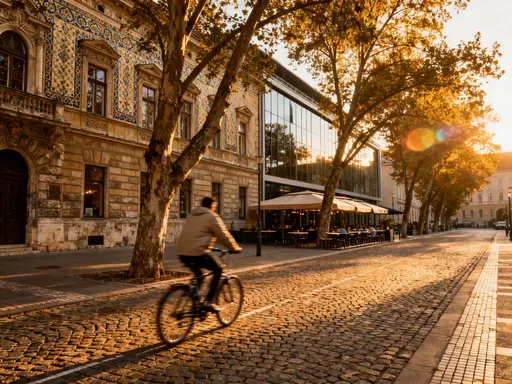
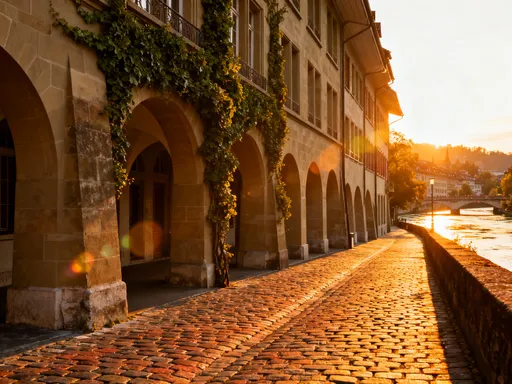
Bern’s Old Town is more than a historic district—it’s a living canvas. As a UNESCO World Heritage Site, it preserves over 600 years of architectural harmony, where sandstone facades glow amber under the afternoon sun and arched arcades shelter boutique shops and cafés. Walking through Gerechtigkeitsgasse or Kramgasse, visitors encounter clock towers like Zytglogge, whose intricate astronomical dial has marked time since the 15th century. These streets aren’t just picturesque; they are structured for visual rhythm, with repeating arches and symmetrical facades that guide the eye and frame perfect shots.
Photographers benefit from the city’s consistent building height and narrow lanes, which create natural leading lines. The arcades, stretching over five kilometers, offer shelter from rain while allowing soft, diffused light—ideal for portraits or atmospheric street photography. Reflections in rain puddles double the beauty of centuries-old fountains, such as the Kindlifresserbrunnen, adding depth and symmetry to compositions. Even without professional gear, smartphone users can capture stunning details: wrought-iron shop signs, carved stone figures, and floral window boxes bursting with geraniums.
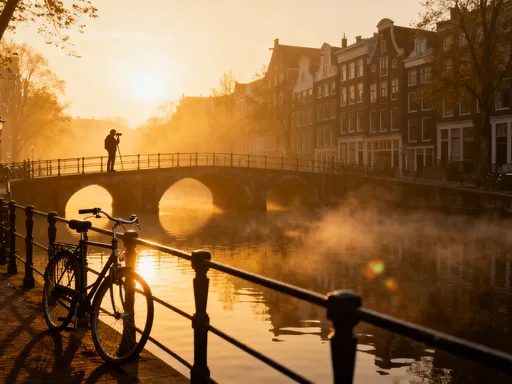
Timing is key. The golden hour, just before sunset, bathes the entire Old Town in warm, honeyed light. Shadows stretch long across the cobbles, enhancing texture and dimension. At this time, the Zytglogge’s clock face catches the sun like a gilded mirror, and the rooftops of the Münster terrace glow against the sky. For early risers, dawn brings mist rising off the Aare River, softening the cityscape into a dreamlike palette. Whether shooting wide-angle cityscapes or intimate architectural details, the Old Town rewards patience and perspective.
Rosengarten’s Blooming Magic
Perched on a hillside overlooking the Aare River’s graceful bend, Rosengarten is Bern’s open-air masterpiece. This terraced park blooms with over 220 varieties of roses from June to October, creating a fragrant tapestry of color that shifts with the seasons. But its true magic lies in the panoramic view: the entire city unfolds below, framed by green hills and crowned by the spire of Bern Minster. It’s a vantage point that feels both grand and intimate—a place where nature and urban elegance coexist in perfect balance.
Photographers find endless inspiration here. In late spring, the garden’s lower levels burst with tulips and daffodils, offering soft foregrounds for cityscape shots. By midsummer, roses dominate—crimson, blush pink, and butter yellow—each bloom glistening with morning dew if captured early. The elevated pathways provide multiple shooting levels, allowing for layered compositions: a close-up of a dew-covered petal in the foreground, a bench shaded by blossoms in the midground, and the distant skyline fading into soft focus.
For the most atmospheric images, visit just after sunrise. The low sun filters through the trees, casting dappled light across stone paths and illuminating the petals from within. Fog often lingers in the river valley, softening the city into silhouettes. A tripod helps stabilize long exposures, especially when using macro settings to capture delicate textures. As the day progresses, the garden becomes more social—families picnic, couples stroll—but the upper terraces remain peaceful, offering solitude and unobstructed views. Even in autumn, when flowers fade, the garden retains its charm, with golden foliage and clear sightlines to the distant Alps.
The Aare River: Nature’s Photogenic Pulse
The Aare River is Bern’s lifeblood and one of its most striking visual features. Its waters, a vivid turquoise due to glacial runoff from the Bernese Alps, cut through the city in a wide, powerful arc. This natural ribbon adds movement, color, and reflection to any photograph, whether captured from a bridge, a riverbank, or even mid-swim. The contrast between the wild river and the orderly stone buildings of the Old Town creates a dynamic tension that defines Bern’s aesthetic.
Several viewpoints offer exceptional photo opportunities. Marzili, accessible by a funicular from the city center, provides a high-angle perspective where the river curves beneath the Nydeggbrücke. From here, photographers can capture the full sweep of the city, with the river acting as a reflective foreground. The Marzilibad, a public swimming area along the river, is lively in summer, with locals floating downstream in inflatable rings—a candid, joyful element that adds human interest to wide shots.
For those willing to enter the water, Bern’s river swimming culture offers a unique vantage point. Floating downstream with the current, swimmers pass under stone bridges and alongside tree-lined banks, seeing the city from a rare perspective. Waterproof cameras or action cams can capture this journey, showing the city’s underbelly—the moss-covered bridge supports, the play of light on rippling water, the sudden appearance of a kingfisher darting across the surface. Even from shore, the Aare rewards stillness: the way sunlight dances on rapids, the sound of water rushing over rocks, and the way shadows shift as clouds pass overhead.
Along the riverbanks, grassy areas like the BärenPark riverside path provide stable ground for tripods and long exposures. Evening light turns the water into liquid gold, and during blue hour, the city’s lights begin to shimmer on the surface. The Aare is not just a backdrop—it’s a living element that brings energy and serenity in equal measure.
Hidden Courtyards and Urban Surprises
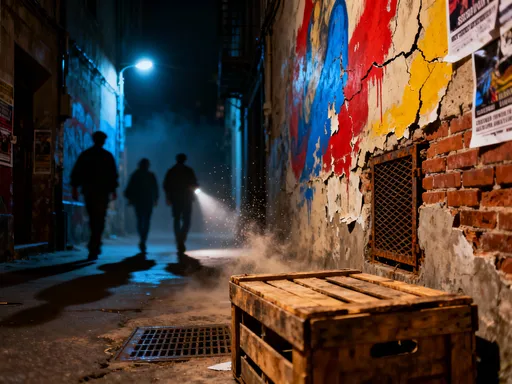
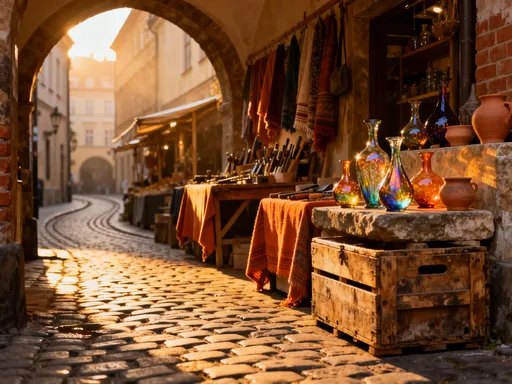
Beyond the main streets, Bern reveals a quieter, more unexpected side. Tucked behind unassuming doorways and narrow alleyways are hidden courtyards—private yet accessible, historic yet alive with modern creativity. These spaces, once part of medieval guildhalls or monasteries, now host art installations, seasonal markets, and quiet seating areas. They offer a contrast to the grandeur of the Old Town: raw textures, graffiti murals, and unexpected bursts of color against centuries-old stone.
One such courtyard lies behind the former Dominican Church, now part of the Kunstmuseum Bern. Here, a modern glass extension meets Gothic walls, creating a dialogue between old and new. Street artists have left their mark on adjacent passages, with large-scale murals depicting abstract forms and local symbols. These urban art spots are ideal for edgy, contemporary photography—high contrast, bold lines, and vivid colors that pop against the muted stone.
Another gem is the Mattenhofgasse area, where courtyards open like secrets. One moment you’re on a quiet street, the next you’re surrounded by ivy-covered walls, a trickling fountain, and a resident cat sunning itself on a windowsill. These spaces invite intimate photography—details of weathered wood, rusted hinges, flower pots perched on ledges. They feel undiscovered, even though they’re just steps from busy thoroughfares. For creators seeking authenticity, these corners offer storytelling potential: a story of time, resilience, and quiet beauty.
Exploring these hidden areas requires curiosity more than a map. Turn down alleys marked with old guild signs, follow the sound of water, or simply pause at a half-open gate. Many courtyards are open during daylight hours, and some host pop-up exhibitions or small concerts in summer. The key is to move slowly, observe closely, and let the city reveal itself in fragments—a cracked wall, a painted door, a shaft of light falling across a cobblestone floor.
Einstein’s Bern: Science Meets Aesthetic
Bern holds a special place in scientific history as the city where Albert Einstein developed his theory of relativity while working at the Swiss Patent Office. His former residence at Kramgasse 49 is now a museum dedicated to his life and work, but it’s also a site of quiet beauty. The building itself is a classic example of Old Town architecture, with tall windows, wooden floors, and a view of the Aare River. Photographing it isn’t just about documenting history—it’s about capturing the atmosphere of inspiration.
The Einstein Museum offers carefully curated exhibits, but its visual appeal lies in the interplay of light and space. Sunlight streams through the windows, illuminating displays of original letters, diagrams, and personal belongings. The contrast between scientific precision and human warmth is striking: a chalkboard with equations next to a photo of Einstein laughing. These details invite thoughtful composition—using shallow depth of field to focus on a handwritten note, or framing a window view that includes both the river and a replica of Einstein’s study.
Outside, a plaque marks the apartment where he lived from 1903 to 1905. It’s a simple marker, but powerful in context. Photographers can create narrative sequences: the plaque, the window, a reflection in the glass, a passerby pausing to read. The surrounding street, Kramgasse, remains largely unchanged—adding a sense of timelessness. This location reminds us that great ideas often emerge in ordinary settings, and that beauty can reside in both equations and architecture.
For those interested in thematic storytelling, pairing images of Einstein’s Bern with modern scientific imagery—such as star maps or light refraction diagrams—can create a visual bridge between past and present. Even without technical knowledge, the emotional resonance of discovery and curiosity can be conveyed through light, shadow, and composition.
Museums as Visual Journeys
Bern’s museums are not just repositories of culture—they are destinations for visual exploration. The Zentrum Paul Klee, designed by Renzo Piano, stands as a sculptural landmark on the city’s outskirts. Its three undulating buildings, covered in golden mesh, resemble waves frozen in time. Inside, skylights and curved walls create a dynamic interplay of natural light and space, making every gallery a potential photo studio. Even without deep knowledge of Klee’s art, visitors can appreciate the architecture’s elegance and the way it frames abstract forms.
The Bern Historical Museum, housed in a grand 19th-century building, offers a different kind of visual richness. Its ornate ceilings, marble columns, and glass display cases create a sense of grandeur. Natural light filters through high windows, illuminating artifacts from Bern’s past—from medieval armor to intricate clocks. The museum’s layout encourages slow wandering, with long hallways and alcoves that lend themselves to dramatic compositions. Reflections in glass cases can be used creatively, layering past and present in a single frame.
Both museums are photographer-friendly, allowing non-flash photography in most areas. This makes them ideal for capturing details: the texture of a painted canvas, the gleam of a historic coin, the shadow of a railing across a stone floor. For families or casual visitors, these spaces offer more than art—they provide serene environments where light, color, and form come together in harmony. Even the museum cafés, with their large windows and minimalist design, are worth photographing.
Visiting these museums early in the day ensures fewer crowds and better lighting. Weekday mornings are especially quiet, allowing for unobstructed views and longer time to compose shots. Whether drawn by art, architecture, or atmosphere, these institutions prove that culture and beauty are inseparable.
Sunset to Streetlights: Bern After Dark
As daylight fades, Bern transforms into a city of warm glows and soft contrasts. The arcades of the Old Town, once shaded, now hold pools of lamplight. Bronze fountains catch the last light, then shimmer under golden streetlamps. The Bern Minster, illuminated against the darkening sky, becomes a beacon—a vertical landmark visible from many parts of the city. This transition from day to night offers some of the most atmospheric photography opportunities.
Begin at the Münster terrace just before sunset. The west-facing viewpoint captures the sun dipping behind the hills, casting long shadows and rich colors across the rooftops. As twilight deepens, the city’s lighting system gradually activates. Unlike cities with harsh neon, Bern uses warm-toned fixtures that enhance its historic character. The arcades, stretching like tunnels of light, invite long-exposure shots—capturing the blur of passing pedestrians while keeping the architecture sharp.
For light trail photography, position a tripod near the Nydeggbrücke. Cars and trams move slowly across the bridge, their headlights painting streaks of light over the river. The reflection in the Aare doubles the effect, creating symmetrical patterns. A shutter speed of 10–20 seconds works well, depending on traffic flow. Meanwhile, the Marzili funicular glows as it climbs the hillside, a moving point of light in the darkness.
Evening walks through the Old Town are safe and pleasant. The reduced noise and softer light create a meditative mood. Shop windows display warm interiors—bakers arranging pastries, books arranged on wooden shelves. These candid moments, captured respectfully from the sidewalk, add authenticity to a visual story. By 10 p.m., the city quiets, but the beauty remains—the stillness, the glow, the sense of a place that values calm as much as charm.
Bern doesn’t shout for attention—it invites you to look closer. Its power lies not in spectacle but in subtle harmony: nature and stone, past and present, silence and color. These theme-based zones aren’t just beautiful; they’re storytellers. For anyone seeking meaningful, Instagram-worthy moments without chasing trends, Bern is the quiet masterpiece waiting to be seen—and shared.