You Won’t Believe These Hidden Photo Spots in Si Phan Don
Imagine standing where the Mekong River splits into a maze of emerald channels, surrounded by jungle-covered islands and the quiet hum of nature. That’s Si Phan Don, Laos — a place where time slows down and every turn reveals a postcard-worthy scene. I went searching for the most stunning natural photo spots, and what I found was beyond imagination. From cascading waterfalls to secluded riverbanks, this is where raw beauty meets perfect stillness. The islands breathe with a rhythm all their own, shaped by seasonal floods, local traditions, and an ecosystem thriving in quiet harmony. For photographers seeking authenticity, Si Phan Don isn’t just a destination — it’s a revelation.
Discovering Si Phan Don: A Photographer’s Dream Come True
Located in southern Laos within Champasak Province, Si Phan Don — which translates to “Four Thousand Islands” — is not defined by exact numbers, but by an endless sense of possibility. Formed by the Mekong River as it fractures into a labyrinth of channels before reaching Cambodia, this vast riverine archipelago offers a rare blend of geographical wonder and cultural serenity. Though many of the islands are tiny, seasonally submerged, or uninhabited, a few stand out as gateways to immersive visual storytelling. The region remains refreshingly untouched by mass tourism, allowing photographers to capture scenes that feel timeless rather than staged.
What makes Si Phan Don particularly compelling is its unpretentious authenticity. There are no grand monuments or bustling markets, but instead, a landscape shaped by water, greenery, and daily rhythms that have changed little over generations. Traditional wooden stilt houses dot the shores, built to withstand seasonal floods. Palm trees sway gently in the breeze, and children wave from dugout canoes paddling between islands. For the observant photographer, these moments of ordinary life become extraordinary images — not because they are dramatic, but because they are real.
The archipelago’s biodiversity enhances its visual richness. Herons stalk the shallows at dawn, kingfishers flash turquoise against green reeds, and the rustle of palm fronds often gives way to the distant call of gibbons. The air carries the scent of wet earth and frangipani, especially after a brief tropical shower. This sensory depth translates powerfully through the lens, especially when paired with thoughtful composition. Whether shooting wide landscapes or intimate details, the environment invites patience and presence — qualities that elevate photography from mere documentation to art.
The Magic of Waterfalls: Khone Phapheng and Somphamit Falls
No visual journey through Si Phan Don is complete without witnessing the raw power of its waterfalls, chief among them Khone Phapheng and Somphamit. Khone Phapheng is the largest waterfall by volume in Southeast Asia, a thunderous cascade created where the Mekong funnels through narrow channels and plunges over ancient basalt formations. During the wet season, from July to October, the falls are at their most dramatic — a churning spectacle of whitewater and mist that rises like breath from the river’s surface. Sunlight often breaks through the spray, painting fleeting rainbows that hover above the rapids like nature’s own spotlight.
For photographers, the challenge and reward lie in capturing both the scale and the detail. Wide-angle lenses reveal the vastness of the cascades, while telephoto shots isolate the dance of individual water droplets suspended in motion. Long-exposure techniques, using shutter speeds of several seconds, transform rushing water into soft, silken ribbons — a contrast that emphasizes stillness within chaos. The best light arrives in the early morning, when the sun strikes the falls from the east, illuminating the mist without creating harsh highlights. Late afternoon offers warmer tones, ideal for silhouette work against the glowing sky.
Nearby Somphamit Falls, sometimes called the “Little Niagara of the Mekong,” provides a more accessible yet equally compelling subject. Located on the eastern side of Don Som, this series of rapids and smaller drops flows over rocky ledges, creating natural pools perfect for reflection shots. Elevated wooden walkways allow safe access to prime vantage points without disturbing the surrounding habitat. Photographers can frame the falls with overhanging foliage or include local visitors wading in the shallows, adding human scale to the natural drama. Unlike more commercialized waterfalls in the region, Somphamit remains low-key, with no entry fees or crowds, preserving its authenticity.
To make the most of these locations, timing is essential. Arriving early ensures fewer people and softer light. Carrying a polarizing filter helps reduce glare on wet rocks and enhances the saturation of greens and blues. A tripod is nearly indispensable, especially for long exposures, though photographers should ensure it’s placed on stable ground away from slippery surfaces. Most importantly, these sites demand respect — for the power of the water, the fragility of the ecosystem, and the local customs that govern access.
Island Hopping with a Lens: Don Det and Don Khon
Among the thousands of islands in the archipelago, Don Det and Don Khon stand out as the most accessible and visually enchanting for travelers and photographers alike. Connected by a colonial-era bridge, these neighboring islands offer a blend of natural beauty and gentle tourism infrastructure. Bicycle paths wind through coconut groves and past guesthouses built on stilts, their bamboo walls blending seamlessly into the greenery. Hammocks strung between trees invite quiet contemplation — and provide perfect subjects for candid, lifestyle photography.
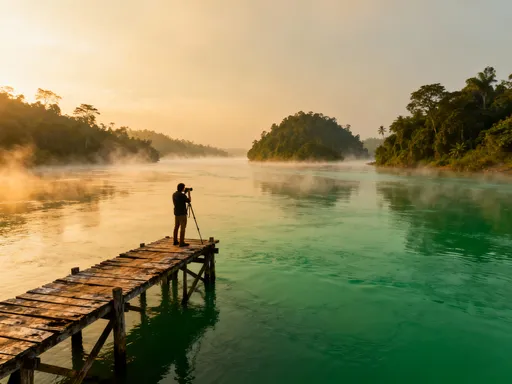
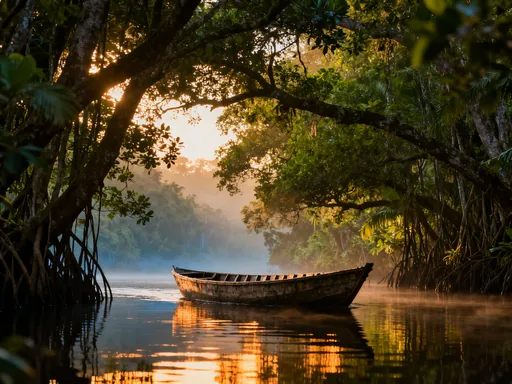
Morning light here is nothing short of magical. As the sun rises over the eastern bank, it casts a golden glow across the river, turning the water into a mirror that doubles the image of palm trees and wooden boats. This is the ideal time to capture reflections — a favorite technique among landscape photographers. The stillness of the early hours, broken only by the splash of a fish or the call of a water hen, enhances the sense of solitude. By midday, when the sun climbs higher, shadows shorten and contrast increases, making it better suited for black-and-white conversions or high-contrast compositions.
Evenings bring their own visual rewards. The western sky ignites in shades of orange and pink as the sun dips behind stilted homes and fishing nets hung to dry. Silhouetted figures — a monk walking along the path, a woman carrying a basket of vegetables — become powerful compositional elements. The warm light bathes wooden structures in a honeyed tone, revealing the texture of weathered planks and hand-carved details. These moments, fleeting and unrepeatable, are what elevate travel photography from snapshots to storytelling.
Don Khon also holds a unique historical layer: remnants of a French colonial railway built in the early 20th century. Though never fully completed, sections of rusted tracks still snake through the jungle, overgrown with vines and moss. These decaying rails, juxtaposed with lush vegetation, offer a compelling subject for photographers interested in the dialogue between nature and human ambition. Captured with a shallow depth of field, the blurred greenery behind the tracks creates a dreamlike effect, as if the jungle is slowly reclaiming history.
The Irrawaddy Dolphins of Don Khon: A Rare Encounter
One of Si Phan Don’s most cherished and fragile treasures is the population of Irrawaddy dolphins that inhabit the Mekong’s waters near the Cambodian border. These rare freshwater dolphins, with their rounded heads and gentle expressions, are not only biologically unique but also culturally significant. With fewer than a hundred individuals remaining in this stretch of the river, each sighting is both a privilege and a reminder of the urgent need for conservation. For photographers, capturing these elusive creatures requires patience, ethics, and a deep respect for their environment.
The best opportunities to see the dolphins occur in the early morning, when the river is calm and boat traffic is minimal. Local operators offer quiet, small-boat tours from Don Khon, using electric or paddle-powered vessels to reduce disturbance. Unlike larger motorboats, these crafts glide silently, increasing the chances of a natural encounter. The dolphins often surface in small groups, their dorsal fins breaking the water with a soft splash. They are not performers; they do not leap or wave. Their beauty lies in their quiet presence, their slow, deliberate movements through the current.
Photographing them ethically is paramount. Experts and local guides consistently advise against using flash, which can disorient the animals. Drones are strictly prohibited in the protected zone — a rule that must be honored to prevent stress and habitat disruption. Instead, photographers are encouraged to use natural light and longer focal lengths to maintain a respectful distance. A 100-400mm lens is ideal for capturing close-up details without encroachment. Framing the dolphins against the wide expanse of the river emphasizes their vulnerability and the vastness of their natural home.
Beyond technical considerations, this experience offers a profound emotional dimension. Images of the Irrawaddy dolphins do more than document a species — they tell a story of coexistence, of a river that sustains life in delicate balance. When shared responsibly, these photographs can raise awareness and support for ongoing conservation efforts. They remind us that some of the most powerful images are not the most dramatic, but the most mindful.
Secret Vantage Points: Finding Solitude in Nature
While the main islands attract visitors, some of the most breathtaking photo opportunities lie off the beaten path. Hidden trails behind guesthouses lead to quiet riverbanks where the only footprints are those of birds. Bamboo bridges, swaying gently with each step, connect to tiny islets accessible only by foot or kayak. These secluded spots offer a rare commodity in modern travel: uninterrupted stillness. Here, the sounds of nature — the rustle of reeds, the hum of cicadas, the distant call of a hornbill — replace the chatter of tourists.
Golden hour, the period just after sunrise and before sunset, transforms these hidden corners into ethereal landscapes. The low-angle light filters through palm fronds, casting intricate shadows on the sand. Mist rises from the water, curling like smoke across the surface. Dew clings to spiderwebs, turning them into glistening works of art. These details, often overlooked, become focal points in macro photography. A single drop of water on a leaf, magnified, reveals a miniature world of reflection and texture.
Exploring these areas requires minimal gear but maximum awareness. A lightweight backpack with a camera, extra battery, and a small notebook for notes or sketches is all that’s needed. Wide-angle lenses excel in capturing the sweeping beauty of river vistas, while macro settings reveal the intricate patterns of tropical flowers, dragonfly wings, or bark textures. The key is to move slowly, to pause often, and to let the environment reveal itself. Some of the best photographs emerge not from chasing a shot, but from waiting for it.
Local knowledge can enhance the experience. Friendly residents often point out lesser-known trails or safe crossing points during the dry season. Some may invite you to share a cup of green tea while explaining which plants bloom at dawn or where kingfishers nest. These interactions, though simple, enrich the visual narrative, adding layers of context and warmth to the images captured.
Capturing Culture and Nature in Harmony
In Si Phan Don, human life and the natural world are not separate realms — they are interwoven. Women weave baskets from river reeds, their fingers moving with practiced ease. Farmers tend small rice plots on higher ground, their conical hats blending into the green fields. Monks in saffron robes walk along dirt paths at dawn, collecting alms from households that rise with the sun. These moments, when photographed with sensitivity, become powerful testaments to sustainable living and cultural continuity.
Respectful photography begins with permission. While many locals are accustomed to visitors, approaching with a smile and a simple gesture — hands together in a slight wai — goes a long way. Waiting for the right moment, rather than staging a scene, ensures authenticity. A child playing with a handmade toy, a fisherman mending his net, or a grandmother grinding herbs in a stone mortar — these are not performances. They are everyday realities, worthy of honor and dignity.
Composition can emphasize harmony. Framing a wooden boat within a curve of the river suggests unity with the water. Placing a farmer in the foreground of a wide rice field highlights the human connection to the land. Using natural light — especially the soft, diffused glow of an overcast morning — enhances warmth without harshness. These choices, both technical and ethical, shape not only the image but the story it tells.
Traditional irrigation systems, built from bamboo and gravity-fed, are another visual metaphor for balance. Channels divert water from the river to small gardens, sustaining vegetables and fruit trees. These systems, passed down through generations, are not only functional but photogenic — their simplicity a contrast to industrial agriculture. Capturing them in detail, perhaps with droplets suspended mid-flow, celebrates ingenuity and sustainability.
Practical Tips for the Travel Photographer
Planning a photography trip to Si Phan Don requires thoughtful preparation. The best time to visit is during the dry season, from November to February, when skies are clear, humidity is lower, and water levels reveal more of the riverbed and islands. During the wet season, many paths may be flooded, and access to certain areas becomes limited. However, the lush greenery and dramatic waterfalls can make the challenges worthwhile for adventurous photographers.
Essential gear includes a reliable DSLR or mirrorless camera with a range of lenses — a wide-angle (16-35mm) for landscapes, a standard zoom (24-70mm) for versatility, and a telephoto (70-200mm or 100-400mm) for wildlife and distant details. A polarizing filter helps manage reflections on water and enhances sky contrast. A sturdy yet portable tripod is crucial for long exposures, especially at waterfalls or during low-light conditions. Because of the high humidity, a waterproof camera bag and silica gel packs are recommended to protect electronics. Power access may be limited, so extra batteries and a portable charger are wise investments.
Transportation to Si Phan Don typically begins with a flight or bus to Pakse, the capital of Champasak Province. From there, a ferry ride lasting one to two hours delivers visitors to Don Det or Don Khon. Bicycles are the primary mode of transport on the islands — affordable, quiet, and eco-friendly. Rentals are widely available, and the flat terrain makes cycling accessible to most travelers. For reaching more remote spots, small local boats can be hired for short trips.
Staying connected is possible but limited. Local SIM cards from Lao Telecom or Unitel provide basic data for navigation and communication, though signal strength varies. Offline maps downloaded in advance are highly recommended. Accommodations range from basic bungalows to more comfortable eco-lodges, many of which support community-based tourism initiatives. Choosing these establishments not only ensures a more authentic experience but also contributes directly to local livelihoods.
Finally, the principle of “leave no trace” is essential. Littering, disturbing wildlife, or straying from marked paths can harm the fragile ecosystem. Photographers should avoid using drones without explicit permission, especially near protected areas. Respecting local customs — dressing modestly, speaking quietly, and asking before photographing people — fosters goodwill and ensures that the beauty of Si Phan Don endures for future generations.
Where Nature Still Takes the Perfect Shot
Si Phan Don is more than a collection of islands — it is a living canvas, painted anew each day by the light of the sun, the flow of the river, and the quiet resilience of its people. In an age where so many destinations feel curated or overexposed, this corner of Laos remains refreshingly unfiltered. It does not perform for the camera; it simply exists, and in that existence, it offers something rare: authenticity.
For photographers, the journey here is not just about capturing beautiful images. It is about slowing down, observing deeply, and connecting with a place on its own terms. It is about learning to see not just with the eye, but with the heart. The most powerful photographs from Si Phan Don will not be those with perfect exposure or composition, but those that carry the quiet magic of a sunrise over the Mekong, the gentle arc of a fisherman’s net, or the fleeting glimpse of a dolphin breaking the surface.
As you plan your visit, remember that your camera is not just a tool — it is a bridge. A bridge between worlds, between moments, between what is seen and what is felt. Use it with care, with respect, and with wonder. Let Si Phan Don remind you that the most unforgettable images are not taken — they are given. And in return, let your presence honor the land, the water, and the people who call this place home. Let your lens not only capture beauty, but help preserve it.