You Won’t Believe These Pula Viewpoints — Pure Instagram Gold
Pula, Croatia, isn’t just ancient ruins and Adriatic breeze — it’s a visual feast waiting to explode on your feed. I’m talking golden-hour glows, cliffside panoramas, and hidden spots most tourists miss. As someone who chased every viewpoint this city offers, I can say: each one delivers a different kind of magic. From Roman amphitheaters to quiet coastal trails, Pula’s scenery blends history and nature in ways that feel almost unreal — and yes, very camera-ready. Whether you're traveling with family, seeking peaceful moments, or simply craving beauty that soothes the soul, Pula offers more than postcard views. It offers connection — to light, to place, to stillness. And for those who carry a camera not just for likes, but for memories, this coastal gem is a dream waiting to be captured.
The Heart of Pula: Arena at Sunset
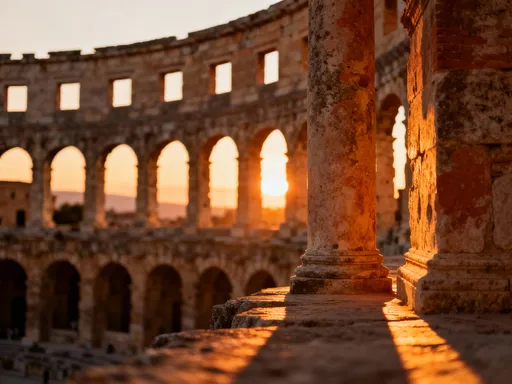
The Pula Arena stands as one of the best-preserved Roman amphitheaters in the world, and its presence dominates the city’s skyline with quiet authority. While many visit for its historical significance — having hosted gladiator battles nearly two millennia ago — photographers and visual storytellers know it as something even greater: a living canvas for light and shadow. As the sun begins its descent behind the Istrian hills, the outer limestone walls of the Arena begin to glow, transforming from pale gray to warm amber. This is the moment when the ancient structure feels most alive, its arches framing the sky like a series of natural picture windows.
For the most compelling shots, timing is everything. Arrive at least 90 minutes before sunset to scout angles and avoid the midday crowds that often gather for guided tours. The elevated walkway along the northern perimeter of the Arena, accessible from the surrounding park, offers an unobstructed view of the entire façade with the sea faintly visible in the distance. This vantage point allows for full-building compositions, especially effective when using a wide-angle lens to capture the grandeur without distortion. For more intimate portraits of the architecture, move closer and shoot upward, letting the sky fill the background and the stone columns rise like sentinels into the light.
One of the most powerful techniques at this location is silhouette photography. Position yourself so the setting sun is directly behind the Arena, then adjust your exposure to underexpose slightly. This turns the structure into a dramatic black outline against a fiery sky, emphasizing its monumental scale. The contrast between the warm tones of the sky and the cool blue of the emerging twilight creates a natural gradient that enhances depth. Tripods are not always practical in this public space, but a stabilized handheld shot or a rested elbow on a low wall can yield sharp results, especially when shooting in burst mode to catch fleeting moments of cloud movement or birds in flight.
Families visiting the Arena will appreciate that the surrounding green spaces are stroller-friendly and shaded in parts, making it a comfortable stop even during warmer months. Children often marvel at the size of the structure, and parents can use the moment to gently introduce history through storytelling — perhaps imagining the sounds of ancient crowds or the drama of the games once held within. Yet even without historical context, the visual impact remains profound. The Arena is not just a monument; it is a stage set by time, where every sunset writes a new scene. And for those who return again and again, there’s a quiet joy in noticing how no two evenings look the same — how light, weather, and mood combine to create something entirely unique each time.
Kaštel: Where History Meets Horizon
Nestled in the heart of Pula’s old town, the Kaštel complex is a layered fortress that dates back to the 13th century, though its foundations reveal traces of Roman and medieval construction. Today, it houses the City Museum of Pula, but its real treasure lies in the terraced walkways and arched openings that frame panoramic views of the harbor and the open Adriatic beyond. Unlike more commercialized viewpoints, Kaštel remains relatively uncrowded, offering a peaceful atmosphere ideal for thoughtful photography and quiet reflection. Its elevated platforms provide a natural vantage point where history and horizon converge — where the textures of centuries-old stone meet the endless blue of the sea.
One of the most compelling aspects of photographing from Kaštel is the ability to create layered compositions. Through its weathered arches, you can capture the bustling marina below, where sailboats rock gently at anchor and ferries glide toward distant islands like Cres and Lošinj. The contrast between the stillness of the ancient walls and the movement of the water creates a dynamic tension in the frame. Using a mid-range zoom lens (70–200mm) allows photographers to isolate specific elements — a lone fisherman mending nets, the mast of a yacht cutting across the horizon, or the distant silhouette of a lighthouse on a rocky outcrop.
Lighting plays a crucial role in shaping the mood of your images here. Morning light, soft and diffused, brings out the subtle textures in the stone without harsh shadows. This is the ideal time for close-up architectural shots, where details like carved inscriptions, iron grilles, and moss-covered crevices come alive. By midday, the sun can be too direct, creating high contrast that’s difficult to manage without graduated filters. But in the late afternoon, as the sun shifts westward, golden rays begin to skim across the water, turning the harbor into a mirror of shimmering light. This is when long-exposure techniques work best — setting a slow shutter speed to blur the motion of waves while keeping the fortress walls sharply defined.
For families exploring the site, Kaštel offers both educational and aesthetic value. The museum inside presents curated exhibits on Pula’s maritime heritage, Roman artifacts, and local traditions — all accessible in clear, multilingual displays. Children can engage with interactive maps and historical models, making the past feel tangible. Meanwhile, parents can step outside between galleries to capture quiet moments: a child peering through an ancient window, a couple pausing at a viewpoint, or the way sunlight falls across a stone staircase. These candid scenes, layered within the grandeur of the setting, often become the most cherished photos — not because they are perfectly composed, but because they are real.
Temple of Augustus and the Hidden Path Behind
The Temple of Augustus, with its Corinthian columns and weathered dedication to the first Roman emperor, is one of Pula’s most photographed landmarks — but most visitors only see it from the front. Few realize that behind the temple, tucked between a quiet residential lane and a low stone wall, a narrow footpath winds upward into a secluded overlook. This semi-hidden viewpoint offers a rare perspective: the temple’s spire rising in the foreground, perfectly framed against the endless expanse of the Adriatic. It’s a scene that feels almost cinematic — quiet, atmospheric, and rich with depth.
Finding the path requires a bit of local knowledge. From the main square in front of the temple, turn left and follow the cobblestone street as it curves gently uphill. Look for a small opening between two houses, marked only by a worn stone step and a handrail. The trail itself is narrow but well-maintained, winding through native Mediterranean shrubs and wildflowers. After a short climb, it opens onto a flat terrace with an unobstructed view eastward over the sea. This is where the magic happens — especially in the late afternoon, when the sun begins to sink and casts a soft, golden backlight across the temple’s silhouette.
Photographers will appreciate the storytelling potential of this composition. The temple, a symbol of permanence, stands in quiet contrast to the ever-changing sea. Using a polarizing filter can deepen the blue of the sky and reduce glare on the water, enhancing the separation between elements. A medium telephoto lens (around 85mm) works well to compress the distance between the temple and the horizon, creating a sense of intimacy. For more dramatic effect, try a long exposure during twilight — letting the last light fade into deep indigo while the temple remains a dark, dignified shape against the sky.
This spot is particularly meaningful for travelers seeking moments of stillness. Unlike the busier viewpoints, it invites contemplation. You might sit for a few minutes, listening to the distant crash of waves and the rustle of leaves, feeling the warmth of the stone beneath your hands. For mothers and caregivers — often the ones holding the family together during travel — this quiet bench offers a rare pause, a chance to breathe and simply be. And when you do raise your camera, the photo you take isn’t just of a temple or a seascape; it’s of a feeling — of peace, of beauty, of being present in a place that has stood for centuries, watching the same sun set again and again.
The Trail to Verudela Beach: Coastal Magic Off the Map
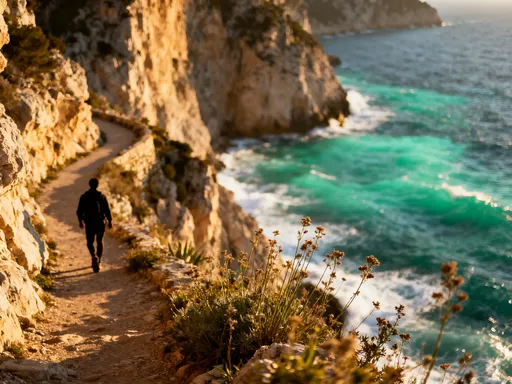
Just a short walk from Pula’s city center, the trail to Verudela Beach offers a refreshing escape into untouched coastal nature. While the beach itself is a popular summer destination, the path leading to it — especially the unmarked clearings along the way — holds some of the most authentic and breathtaking views in the region. This is not a manicured boardwalk or a crowded tourist path. It’s a rugged, natural route that winds through pine-scented groves, over limestone ridges, and alongside cliffs that drop sharply into turquoise coves. Each turn reveals a new vista: a hidden inlet, a cluster of sea caves, or a distant sailboat gliding across the horizon.
The trail begins near the southern edge of the city, accessible from the end of Kozala Street. From there, a well-worn dirt path follows the coastline, marked occasionally by small stone cairns and faded directional signs. While not officially maintained, the route is safe for confident walkers wearing sturdy shoes. The terrain can be uneven in places, with loose gravel and exposed roots, so it’s wise to proceed with caution, especially when traveling with children. Handrails or safety barriers are absent, which adds to the sense of adventure but requires vigilance near cliff edges.
What makes this hike exceptional is the frequency of spontaneous viewpoints. About halfway to Verudela, a natural opening in the trees reveals a sweeping panorama of the Adriatic, where the water shifts from deep blue to luminous green in the sunlight. This spot, unmarked and unknown to most guidebooks, is ideal for long-exposure photography. Set your camera on a tripod or rest it on a rock, use a neutral density filter to slow the shutter, and capture the hypnotic motion of waves crashing against the rocks. The resulting image — water turned to mist, stone rendered in sharp contrast — evokes a sense of timelessness.
Families who make the journey are often rewarded not just with views, but with moments of shared discovery. Children delight in spotting lizards darting between rocks or jumping from one flat stone to another. Parents appreciate the absence of crowds, the chance to walk without constant vigilance over phones or wallets. And for those who carry a camera, every few meters offers a new composition — a gnarled pine clinging to the cliff, a patch of wild thyme releasing its scent in the sun, or the way light dances across the water’s surface. This trail reminds us that the best travel experiences are not always found in guidebooks, but in the quiet spaces between destinations — where nature speaks louder than any signpost.
Kastel Hill at Dusk: A Local’s Secret
Beyond the main square and the museum complex, a quiet lane known locally as Kastel Hill climbs gently upward into a residential neighborhood. To visitors, it may seem unremarkable — just another cobblestone street flanked by old stone houses with flower-filled balconies. But those who follow it to its upper rim are rewarded with one of Pula’s most heartfelt views: a layered cityscape where red-tiled rooftops cascade toward the sea, church spires rise like sentinels, and the water glows under the fading light of dusk. This is not a tourist hotspot. It’s where locals walk their dogs, where grandparents sit on benches, and where the rhythm of daily life unfolds in quiet harmony.
The magic of this viewpoint lies in its emotional depth. Unlike the grand, sweeping panoramas of coastal cliffs, this scene feels intimate — as if you’re looking into the soul of the city. The warm light of evening wraps around the buildings, highlighting textures in the stone and casting long shadows across the streets. Smoke might rise from a chimney; laundry might flutter on a line. These small, human details add narrative weight to your photos, transforming them from mere landscapes into stories. A wide-angle lens captures the full sweep of the view, while a zoom lens can isolate specific moments — a cat stretching on a windowsill, a child waving from a doorway, the glow of a kitchen light in a top-floor apartment.
Golden hour here is fleeting but powerful. As the sun dips below the horizon, the sky shifts through a spectrum of soft pinks, lavenders, and golds, reflecting off the sea and illuminating the undersides of passing clouds. This is the ideal time for silhouette photography — capturing the dark outlines of rooftops and church steeples against a luminous sky. Using a tripod allows for longer exposures, which smooth out any movement in the scene and create a dreamlike quality. Even without professional gear, smartphone cameras can produce stunning results when stabilized and set to night mode.
For mothers and caregivers, this quiet hillside offers something rare: a moment of calm. The pace slows. The air is cool and fragrant with jasmine. You might sit beside a local elder who smiles and nods, or share a quiet laugh with your child as they point at a barking dog. These are the unscripted moments that define meaningful travel — not the checklist of sights, but the feeling of belonging, however briefly, to a place. And when you take a photo here, you’re not just documenting a view. You’re preserving a feeling — of peace, of connection, of being exactly where you need to be.
Fort Neptun and the Southern Cliffs
On the southern outskirts of Pula, near the edge of the Verudela Peninsula, lies the abandoned Fort Neptun — a remnant of 19th-century military architecture now reclaimed by nature. Though not officially promoted as a tourist destination, this area has become a quiet haven for photographers and explorers drawn to its raw, cinematic beauty. The fort itself is partially overgrown, its stone walls softened by ivy and wild grasses, but the real attraction lies beyond: a series of rugged cliffs that plunge dramatically into the Adriatic. From this elevation, the sea stretches endlessly, its surface broken only by waves crashing against dark rock formations.
Access to the site is straightforward but requires awareness. The fort is not enclosed or restricted, but visitors should respect its condition and avoid entering unstable structures. The surrounding area is public land, and walking along the cliffside paths is permitted as long as safety is prioritized. There are no guardrails, so caution is essential, especially with children. The best approach is to explore during daylight hours, wear non-slip footwear, and stay on visible paths. This is not a place for reckless adventure, but for mindful observation — where the power of nature is felt as much as seen.
Photographically, Fort Neptun offers bold, dramatic compositions. Wide-angle lenses excel here, capturing the vastness of the sea and sky while including the textured stone of the fort in the foreground. Natural frames — such as broken archways or crumbling doorways — can be used to draw the eye toward the horizon, creating depth and focus. The interplay of light and shadow is especially striking in the late afternoon, when the sun skims horizontally across the cliffs, highlighting every crevice and contour. A polarizing filter helps cut through haze and deepen the contrast between stone and water.
For families, this location offers a chance to discuss history and nature together. Parents can explain how forts like this once protected coastlines, while children observe the resilience of plants growing in cracks and the patterns of waves below. It’s a place that invites curiosity — about the past, about the sea, about how time reshapes everything. And for those who seek solitude, the sound of the wind and waves, the smell of salt and pine, and the vast openness of the view create a meditative atmosphere. This is not a polished attraction. It’s a reminder that beauty often thrives in the wild, in the forgotten, in the places that ask us to slow down and pay attention.
Final Reflections: Chasing Light, Not Likes
Pula’s most memorable viewpoints are not just places to take pictures — they are invitations to see more deeply. Each one offers a different kind of light, a different mood, a different story. The Arena at sunset speaks of endurance and spectacle. Kaštel whispers of history layered with daily life. The hidden path behind the Temple of Augustus offers stillness and reflection. The trail to Verudela reveals nature’s quiet artistry. Kastel Hill at dusk connects us to the heartbeat of the city. And Fort Neptun reminds us of time’s quiet power. Together, they form a mosaic of moments that go beyond the visual — they touch the heart.
In an age where travel is often measured by likes and shares, it’s easy to forget that the most meaningful experiences are not the ones that go viral, but the ones that stay with us. A photo that brings back the sound of waves, the warmth of the sun, the laughter of a child — that is the one worth taking. Mindful exploration, not checklist tourism, is what transforms a trip into a memory. It means pausing longer, listening more, and letting the landscape speak in its own language.
For the women who travel — often balancing family, responsibility, and the desire for beauty — Pula offers something gentle yet profound. It offers permission to slow down. To sit on a stone bench and breathe. To raise a camera not for validation, but for remembrance. The best photo you’ll take may not be the most polished, but the one where you felt most alive — where the light, the moment, and your heart aligned.
So chase the light. Not for the feed, but for yourself. Let Pula’s quiet magic remind you that beauty is not something to capture, but to carry within. And when you return home, and scroll through your photos, don’t look for the one with the most likes. Look for the one that makes you close your eyes — and remember exactly how it felt to be there.