Lost in the Wild Beauty of Santiago de Cuba
Nestled between emerald mountains and the wild Caribbean Sea, Santiago de Cuba reveals a side of the island few travelers truly see. Far from the classic postcard spots, this city pulses with raw nature and untamed landscapes. I came looking for adventure — and left transformed by waterfalls hidden in rainforests, misty peaks at dawn, and trails that lead not just to views, but to the soul of the island. Here, nature isn’t curated or commercialized; it’s alive, breathing, and deeply connected to the rhythm of daily life. This is Cuba beyond the guidebooks — a place where every path tells a story, and every vista feels earned.
The Unexpected Natural Heart of Santiago de Cuba
Santiago de Cuba is often celebrated for its revolutionary history and Afro-Cuban culture, but its natural scenery remains one of the Caribbean’s best-kept secrets. While much of Cuba’s tourism spotlight shines on its pristine beaches and colonial architecture, this southeastern gem thrives in elevation, biodiversity, and dramatic geography. The Sierra Maestra mountain range forms a majestic backdrop, stretching like a spine along the coast and creating a dynamic landscape of deep valleys, rushing rivers, and cloud-kissed ridges. Unlike the flat, sun-bleached resorts of the north, Santiago’s terrain is rugged, humid, and teeming with life. Tropical microclimates shift rapidly with altitude, allowing rainforests to flourish at higher elevations while dry coastal scrub clings to sunbaked slopes.
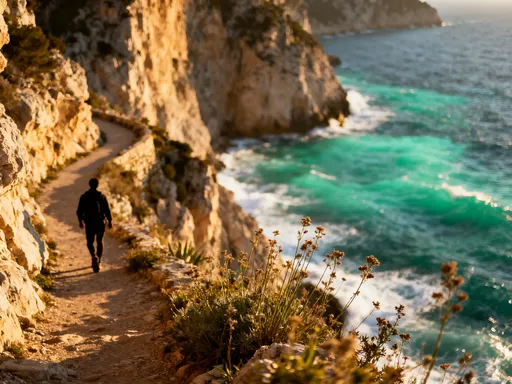
What sets this region apart is its remarkable accessibility to wilderness. Within a short drive from the city center, visitors can transition from urban streets to jungle trails, from bustling markets to silent forest paths. The Caribbean Sea here doesn’t gently lap at sandy shores — it crashes against volcanic rock with raw power, carving out coves and sea cliffs that feel untouched by time. Rivers like the Contramaestre and the Guaso wind through the countryside, feeding lush vegetation and supporting local agriculture. This is not a landscape designed for mass tourism; it’s a living ecosystem where nature and community coexist.
Yet despite its wild character, the region remains approachable. Local guides, small eco-tours, and community-run accommodations make it possible for travelers to explore responsibly. There are no cable cars or paved nature trails — just footpaths, shared knowledge, and the quiet respect that comes from entering a place on its own terms. For those seeking authenticity, Santiago de Cuba offers a rare opportunity: to experience nature not as a spectacle, but as a shared reality with the people who call it home.
Hiking the Sierra Maestra: Where Mountains Tell Stories
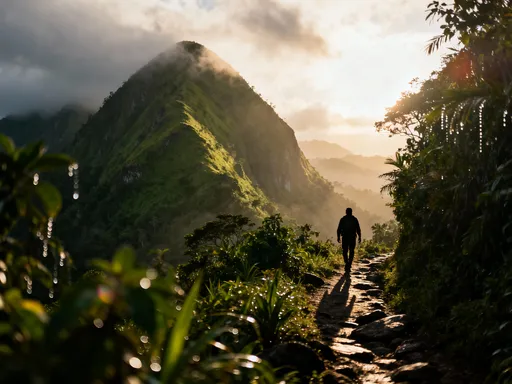
The Sierra Maestra is more than a mountain range — it is a living archive of Cuba’s ecological and cultural history. While many visitors associate these peaks with Fidel Castro’s revolutionary campaign, the mountains hold deeper, older narratives written in their soil, streams, and forests. Hiking through this range is not merely a physical challenge; it is an immersion into layers of history, biodiversity, and human resilience. The most iconic route, the **Pico Turquino** trail, leads to Cuba’s highest point at 1,974 meters (6,476 feet), but the journey matters far more than the summit. Along the way, hikers pass through distinct ecological zones, each with its own climate, flora, and atmosphere.
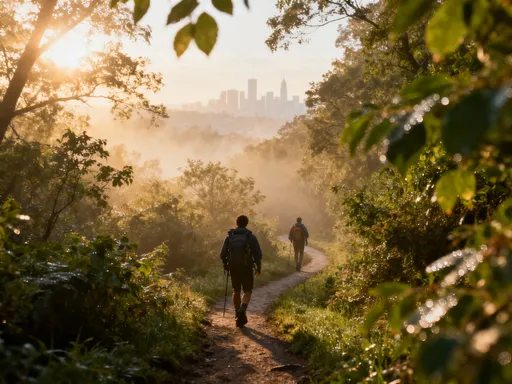
The ascent begins in dry, sun-drenched coastal scrub, where hardy cacti and thorny shrubs dominate. As elevation increases, the air cools and moisture rises, giving way to dense broadleaf forests. Towering ceiba and mahogany trees form a canopy alive with bird calls — the trill of the Cuban trogon, the island’s national bird, echoes through the morning mist. Higher still, the forest transforms into elfin woodland, where stunted trees twist in the wind and moss blankets every surface in velvety green. These transitions happen within a single day’s hike, offering a rare glimpse into how elevation shapes ecosystems.
Equally important are the people who guide these journeys. Many local guides come from small mountain communities like La Gran Piedra or El Cobre, where families have lived for generations in harmony with the land. Their knowledge is not learned from books but passed down orally — names of medicinal plants, seasonal weather patterns, the best paths after rain. They speak of the mountains not as a backdrop, but as a presence — one that demands respect. This cultural connection deepens the hiking experience, turning each step into a dialogue between visitor and place.
Hiking the Sierra Maestra also means walking through history. Near the summit of Pico Turquino stands a simple stone monument honoring José Martí, Cuba’s national hero, placed there in the 1950s. Further down, the remains of makeshift camps used during the revolution can still be seen — humble structures built from stone and wood, now slowly being reclaimed by the forest. These sites are not museum exhibits; they are quiet reminders of how the mountains have sheltered and shaped Cuba’s identity. To hike here is to feel that legacy — not through politics, but through the silence, the elevation, and the enduring strength of the land.
El Salto del Cubano: Nature’s Hidden Waterfall Escape
Just a short journey outside Santiago’s city limits lies one of the region’s most breathtaking natural treasures: **El Salto del Cubano**, a powerful waterfall fed by mountain springs and hidden within a lush valley. Unlike the polished, ticketed attractions found in other Caribbean destinations, this cascade feels untouched by tourism. Access begins with a bumpy ride along a local road, followed by a modest jungle trail that winds through dense foliage. With each step, the sound of rushing water grows louder, building anticipation until the final turn reveals the full spectacle — a curtain of water plunging over moss-covered rock into a wide, crystal-clear pool below.
The pool is surrounded by smooth stone and shaded by towering trees, creating a natural oasis perfect for swimming and reflection. The water is cool and invigorating, a welcome relief from the tropical heat. On weekends, local families gather here, grilling corn over open fires, laughing in the shallows, and sharing meals on flat rocks. But on weekdays, the site often feels private, almost sacred — a place where the only sounds are the falls, the wind, and the occasional call of a hidden bird.
Reaching the base requires careful footing; the rocks are slick with spray, and the current near the fall’s edge can be strong. But the effort is worth it. There is something profoundly grounding about standing beneath a waterfall, feeling its power and purity. For many visitors, this moment becomes a highlight — not because it is grand or famous, but because it feels real. There are no admission fees, no souvenir stands, no loudspeakers. Just nature, in its simplest, most honest form.
El Salto del Cubano also reflects the broader spirit of Santiago de Cuba’s natural attractions — they are not built for mass tourism, but for connection. Locals treat these places as part of their daily lives, not as destinations to be consumed. Visitors who come with respect — who pack out their trash, speak quietly, and tread lightly — are welcomed not as customers, but as guests. This unspoken code of conduct ensures that places like El Salto del Cubano remain pristine, protected not by fences, but by community care.
Siboney Beach and the Wild Caribbean Coastline
While Cuba is famous for its postcard-perfect beaches, **Siboney Beach** offers something different — an authentic, untamed stretch of coastline where nature still rules. Located just 20 minutes from Santiago, this golden-sand beach is mixed with crushed shell and coral, giving it a unique texture and color. The sea is a vibrant turquoise, but unlike the calm waters of Varadero, it carries strong currents and occasional waves, reminding visitors that this is a living, dynamic coast. Palm trees lean naturally in the wind, shaped by years of trade winds, and there are no high-rise resorts in sight — only a scattering of small casas particulares and family-run kiosks selling fresh coconut water and fried snacks known as *frituras*.
What makes Siboney special is its rhythm. This is not a place to lie motionless under an umbrella; it is a place to feel the pulse of island life. Fishermen launch their colorful wooden boats at dawn, returning in the late afternoon with nets full of snapper, lobster, and octopus. At sunset, the sky ignites in shades of orange and crimson, and families gather to walk the shore, children chasing the waves. The energy here is low-key but deeply alive — a blend of leisure and labor, of beauty and utility.
For those who look closer, the underwater world is equally captivating. Snorkeling along the rocky edges reveals patches of healthy coral, sea fans swaying in the current, and schools of bright reef fish darting between crevices. Unlike overvisited reefs elsewhere in the Caribbean, Siboney’s marine life remains relatively undisturbed, thanks to limited tourism and strong local stewardship. Even the beach itself changes with the seasons — shifting shape with the tides, reshaped by storms, yet always returning to its natural balance.
Siboney is also a place of quiet resistance — not political, but cultural. While other parts of Cuba have adapted to mass tourism, this beach remains true to its roots. There are no jet skis, no loud music, no commercial tours crowding the shore. Instead, there is space — space to breathe, to swim, to sit and watch the sea. For travelers seeking authenticity, Siboney offers a rare gift: a beach that feels like it belongs to the island, not to the industry.
The Coffee Trail: History and Nature Intertwined
High in the foothills of the Sierra Maestra, a network of old coffee plantations lies half-reclaimed by the jungle. These **historical fincas**, established in the late 18th and early 19th centuries, were once part of a brutal colonial system that relied on enslaved labor. Today, their stone walls, water mills, and terraced fields stand as quiet monuments to a difficult past, slowly being embraced by vines and roots. Accessible through guided eco-tours, these sites offer a powerful blend of history, ecology, and sensory experience. Walking among the ruins, surrounded by wild coffee shrubs and towering ceiba trees, feels like stepping into a forgotten world — one where nature and memory coexist.
The climate at this elevation is noticeably cooler, a welcome change from the coastal heat. The air is rich with the scent of damp earth, decaying leaves, and the occasional bloom of wild orchid. Guides explain how the steep terrain made plantation life incredibly difficult — hauling water, clearing land, and transporting beans by mule — yet how that same difficulty preserved the region’s biodiversity. Because the slopes were too steep for large-scale agriculture, they were never fully deforested, allowing native species to survive. Today, these areas serve as ecological refuges, home to rare birds, amphibians, and plants found nowhere else on the island.
Some local families now cultivate small organic coffee plots on former plantation land, using traditional methods passed down through generations. The beans are hand-picked, sun-dried, and roasted over wood fires, producing a rich, full-bodied coffee with notes of chocolate and spice. Visitors can taste this coffee on-site, often served in simple ceramic cups, still warm from the flame. It is not a performance for tourists; it is a daily ritual, shared with openness and pride.
The coffee trail is more than a tour — it is a meditation on time, resilience, and renewal. It acknowledges the pain of the past while honoring the strength of those who came after. It shows how nature can heal, how communities can reclaim their land, and how a simple cup of coffee can carry the weight of history. For those willing to listen, these ruins speak not of loss, but of continuity.
Practical Tips for Exploring Santiago’s Natural Side
To fully appreciate the natural wonders of Santiago de Cuba, thoughtful preparation is essential. The region’s beauty comes with challenges — heat, humidity, rugged terrain, and limited infrastructure — but with the right approach, these can be navigated safely and respectfully. Begin each day early. Morning hours offer the coolest temperatures and the best light for photography, whether capturing mist rising from the mountains or sunlight dancing on the sea. By midday, the sun is intense, and trails can become slippery after sudden tropical rains.
Proper footwear is non-negotiable. Trails in the Sierra Maestra and at El Salto del Cubano are uneven, often muddy or rocky, and require sturdy hiking shoes with good grip. Pack essentials: at least two liters of water per person, insect repellent (mosquitoes are common in shaded areas), sunscreen, a lightweight rain jacket, and a small first-aid kit. A reusable water bottle and a daypack are also recommended. While some supplies can be purchased locally, options are limited, so come prepared.
Local guides are not just helpful — they are essential. Many trails are unofficial, unmarked, or pass through community lands that require permission to enter. Guides ensure safety, provide cultural context, and support local economies. They also help visitors avoid sensitive areas and minimize environmental impact. Most guides can be arranged through eco-tourism cooperatives or reputable tour operators in Santiago. Rates are generally modest, and tipping is appreciated but not expected.
Transportation requires planning. While sites like Siboney Beach and El Salto del Cubano are reachable by shared taxi (*colectivo*) from the city, others — such as the higher reaches of the Sierra Maestra or remote coffee fincas — often require a private driver or organized tour. Renting a car is possible but challenging due to road conditions and limited signage. For peace of mind, many travelers opt for guided day trips, which include transport, meals, and expert insight.
The best time to visit is the dry season, from December to April, when rainfall is minimal and trails are more accessible. The months of May to November bring higher humidity and the possibility of tropical storms, though the landscape is greener and waterfalls are at their most powerful. Regardless of season, always check local weather conditions and consult with guides before heading out.
Finally, practice responsible tourism. Ask permission before entering rural areas, avoid picking plants or disturbing wildlife, and carry out all trash. Respect local customs — dress modestly when visiting communities, speak politely, and support small businesses by purchasing locally made goods or meals. These small acts build trust and ensure that Santiago’s natural treasures remain protected for future generations.
Why This Journey Changes How You See Cuba
Santiago de Cuba’s natural landscapes offer more than scenic views — they offer a deeper understanding of the island’s soul. Beyond the vintage cars of Havana and the cobblestone streets of Trinidad, this region reveals Cuba as a place of ecological richness, cultural endurance, and quiet dignity. Each waterfall, mountain trail, and windswept beach tells a story — not of perfection, but of resilience. Nature here is not manicured or controlled; it is wild, adaptive, and deeply intertwined with human life.
When you hike through the Sierra Maestra, you don’t just see Cuba — you feel its history in the cool mountain air, its strength in the steep inclines, its spirit in the stories shared by local guides. When you swim in El Salto del Cubano, you connect with a place that exists for its people, not for profit. When you stand on Siboney Beach at sunset, you witness a rhythm unchanged by time — the daily return of the fishermen, the laughter of children, the endless cycle of tide and light.
This kind of travel is transformative because it slows you down. It asks you to listen, to observe, to move with care. It shifts your perspective from consumption to connection, from sightseeing to feeling. You begin to see Cuba not as a postcard, but as a living, breathing place — complex, beautiful, and full of quiet strength.
And perhaps that is the greatest gift of all. To discover that the true heart of Cuba beats not in its cities or resorts, but in its mountains, forests, and shores — in the wild beauty of Santiago, where nature and culture walk hand in hand. This journey doesn’t just change how you see Cuba. It changes how you see the world.