Unseen Walls: Where Mexico City’s Soul Bleeds Through Hidden Art
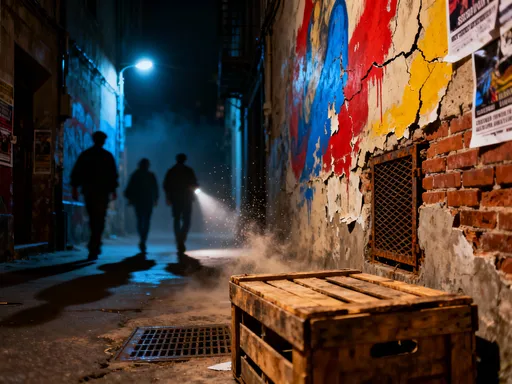
Ever wondered where a city hides its true self? Not in postcard landmarks, but in alleyway murals, abandoned warehouses turned galleries, and backyard studios pulsing with creativity. I stumbled upon Mexico City’s underground art spaces—and honestly, they redefined what travel means to me. Away from crowds, deep in neighborhoods like Roma and Doctores, I found raw, fearless expression painted on cracked walls and whispered in sculpted metal. This isn’t just art. It’s rebellion, memory, identity. You don’t see it unless you look hard—and that’s the point. These hidden corners don’t advertise; they wait. They challenge visitors to move beyond guided tours and curated experiences, to step into the rhythm of everyday life where culture isn’t performed—it lives.
The Pulse Beyond the Tourist Trail
Mexico City is often celebrated for its polished attractions: the Frida Kahlo Museum in Coyoacán, the grand Palacio de Bellas Artes, and the ancient ruins of Teotihuacán just beyond the urban sprawl. These sites are undeniably powerful, offering glimpses into Mexico’s layered history and artistic legacy. Yet, for all their beauty, they represent only a fraction of the city’s creative soul. The deeper pulse—the one that beats with urgency, vulnerability, and unfiltered truth—resides in places without signs, addresses, or entry fees. These are the unofficial art spaces: abandoned factories humming with experimental sound installations, forgotten courtyards where dancers rehearse beneath dripping eaves, and alleyways where spray paint tells stories no textbook ever would.
What makes these hidden zones so vital is not just their aesthetic daring but their role as cultural anchors. In a rapidly modernizing metropolis, where gentrification reshapes entire neighborhoods, underground art spaces serve as living archives of local identity. They preserve voices that might otherwise be silenced by commercialization or displacement. For travelers seeking more than surface-level encounters, these spaces offer something rare: authenticity. They aren’t designed for mass appeal. There are no souvenir shops, no timed tickets, no audio guides. Instead, they demand presence—eyes open, mind quiet, heart receptive. This kind of travel isn’t passive observation; it’s participation in a quiet act of resistance against homogenization.
Moreover, visiting these spaces fosters deeper connections between visitor and community. Unlike formal institutions, which often maintain a clear boundary between artwork and audience, underground galleries dissolve that line. Artists may be present during open hours, willing to discuss their process, their inspirations, their fears. A muralist might explain how a single image references both pre-Hispanic symbolism and contemporary police violence. A sculptor could describe how scrap metal from demolished buildings became the skeleton of a new piece about loss and rebirth. These conversations transform sightseeing into dialogue, turning fleeting moments into lasting understanding.
Roma & Condesa: Backyard Galleries and Living Canvases
The Roma and Condesa neighborhoods, once elite enclaves from the early 20th century, have evolved into dynamic cultural hubs where art flows freely through residential streets. While many visitors come for the tree-lined avenues, art deco facades, and trendy cafés, those who wander deeper discover something more profound: an organic network of backyard studios and street-level galleries. Here, creativity isn’t confined to institutions—it spills onto sidewalks, climbs up brick walls, and takes root in converted garages. The entire neighborhood functions as a living canvas, constantly evolving as new works appear and older ones fade into patina.
One of the most striking features of Roma’s artistic landscape is its concentration of legally sanctioned street art. In designated zones, local and international artists have transformed entire blocks into immersive murals. These aren’t mere decorations; they are visual narratives. A single wall might depict a woman in traditional Zapotec dress standing before a digital skyline, symbolizing the tension between ancestral heritage and urban modernity. Another shows children playing with kites shaped like ancient codices, their strings leading upward into clouds filled with glyphs. These images don’t shout—they invite. They ask viewers to pause, reflect, and consider the layers of meaning beneath the paint.
Beyond the murals, intimate studio spaces operate quietly behind unassuming doors. Some are run by individual artists who open their homes once a month for *abierto* events—open-house exhibitions where neighbors, collectors, and curious passersby mingle over coffee and homemade bread. Others are collaborative projects, like a former mechanic’s shop now shared by five painters, each using the space on different days. These micro-galleries thrive on word-of-mouth promotion, relying on trust rather than advertising. Visitors are encouraged to call ahead, not only to confirm hours but also to honor the personal nature of these spaces.
For travelers, exploring Roma and Condesa on foot offers the best chance to encounter this hidden art world. The neighborhoods are highly walkable, with wide sidewalks, shaded plazas, and frequent benches perfect for resting and observing. A recommended route begins at Parque México and winds through side streets toward Calle Colima, where several artist-run spaces cluster. Along the way, one might stumble upon a pop-up exhibition in a repurposed laundromat or a poetry reading beneath a jacaranda tree in full bloom. The key is to move slowly, look closely, and resist the urge to document everything. Some moments are meant to be felt, not captured.
Doctores: Revival Through Raw Expression
If Roma and Condesa represent art integrated into daily life, Doctores embodies art as urban transformation. Once considered one of the city’s most neglected districts, this industrial corridor south of the historic center has undergone a quiet but powerful renaissance—driven almost entirely by artists reclaiming abandoned spaces. Warehouses with broken windows, vacant lots strewn with debris, and crumbling factory walls have become the raw materials for a new kind of cultural expression. Here, art isn’t just decoration; it’s regeneration.
The shift began in the early 2010s when a small group of artists, frustrated by the lack of affordable studio space in gentrifying neighborhoods, began occupying empty buildings in Doctores. With permission from some property owners and in defiance of others, they transformed these spaces into studios, performance venues, and exhibition halls. What started as necessity evolved into a movement. Today, guided tours led by local residents take visitors through converted textile mills where video projections dance across rusted beams, and through former storage units now housing sculpture gardens made from reclaimed steel and concrete.
One of the most impactful aspects of Doctores’ art scene is its tactile quality. Artists here work with what they find—discarded metal sheets, shattered tiles, old machinery parts. A large installation near the old train tracks uses bent rebar and welded scrap to form a towering figure reaching skyward, its body inscribed with names of migrants who disappeared crossing borders. Another piece, set in a flooded courtyard, consists of floating wooden boats painted with children’s drawings of home—some depicting villages in Oaxaca, others showing cities in the United States. These works are not meant to be pretty. They are meant to unsettle, to provoke, to remember.
Importantly, this transformation has not been driven by government funding or corporate sponsorship. It is a grassroots effort, sustained by community events, volunteer labor, and small donations. Local residents, many of whom live in modest apartments nearby, have become both audience and collaborator. Children help paint background details on murals; elders share oral histories that inspire new pieces. This deep integration ensures that the art remains rooted in place, speaking directly to the people who inhabit it. For visitors, witnessing this process offers a rare glimpse into how creativity can heal and rebuild—not just physically, but emotionally and socially.
The Role of Artist Collectives in Shaping Underground Culture
Behind nearly every hidden art space in Mexico City is a collective—a group of artists united by vision, values, and necessity. Unlike traditional galleries, which often prioritize marketability and prestige, these collectives operate on principles of accessibility, collaboration, and social relevance. Groups like Colectivo 119, La Tallera, and Taller 4 Rojo have become cornerstones of the underground scene, creating platforms for emerging voices and experimental work that might never find a home in mainstream institutions.
Colectivo 119, based in the eastern part of the city, began as a response to police violence and state surveillance. Its members use art as a form of testimony, creating installations that incorporate sound recordings, personal letters, and forensic drawings. Their projects often unfold in public spaces—under bridges, in vacant plazas—where they can reach people who would never enter a museum. Funding comes from crowdfunding campaigns, benefit concerts, and the sale of limited-edition prints, allowing them to remain independent of institutional control. This autonomy is crucial; it enables them to tackle difficult subjects—disappearances, corruption, environmental destruction—without fear of censorship.
La Tallera, inspired by the legacy of painter David Alfaro Siqueiros, focuses on community engagement through muralism and education. Located in a repurposed house in the southern borough of Xochimilco, it hosts weekly workshops for youth, teaching techniques in fresco painting, printmaking, and sculpture. The collective also organizes annual mural festivals, inviting artists from across Latin America to contribute to large-scale public works. These murals often depict indigenous leaders, feminist icons, and ecological defenders, reinforcing a vision of history that centers resilience and resistance.
What sets these collectives apart is their commitment to inclusivity. They do not see art as the domain of the elite or the formally trained. Instead, they invite participation from anyone willing to learn, contribute, or simply bear witness. This democratization of creativity challenges long-standing hierarchies in the art world. It also fosters a sense of ownership among local communities, who begin to see themselves not as passive recipients of culture but as co-creators. For travelers, engaging with a collective’s work offers a chance to move beyond consumption—to contribute, however modestly, to something larger than oneself.
How to Find These Spaces Without Spoiling Their Spirit
As interest in Mexico City’s underground art grows, so does the risk of turning these fragile spaces into tourist attractions. The very intimacy that makes them special—small size, personal connection, limited access—can be eroded by overcrowding, disrespect, or commodification. Therefore, ethical exploration is essential. Finding these spaces should not be about checking them off a list, but about approaching them with humility, curiosity, and care.
One of the best ways to discover authentic art spaces is through local networks. Following Mexican artists and collectives on social media—using hashtags like #ArteEnLaCalle, #TalleresAbiertos, or #GaleríaAlternativa—can lead to announcements about upcoming open studios, performances, or workshops. Many events are shared only in Spanish and promoted through word-of-mouth, which helps maintain their community focus. Attending an *abierto* event, for example, allows visitors to meet artists directly, ask questions, and understand the context behind the work—all while supporting the space through small donations or purchases.
Another responsible approach is to join neighborhood walking tours led by residents or local artists. Unlike commercial tours that prioritize efficiency and photo opportunities, these grassroots excursions emphasize storytelling and connection. A guide might explain how a particular mural commemorates a neighborhood uprising from the 1980s, or how a sculpture garden emerged from a community cleanup effort. These narratives add depth to the visual experience, transforming a simple walk into a meaningful encounter.
When visiting any underground space, certain practices should be observed. First, always ask permission before taking photographs, especially of people or private property. Some artists prefer their work to exist only in the moment, not in digital archives. Second, avoid treating spaces as backdrops for social media content. The goal is not to perform travel but to experience it. Third, support artists directly when possible—by buying a print, donating to a crowdfunding campaign, or simply expressing appreciation in person. These gestures sustain the ecosystem that allows underground art to thrive.
Art as Urban Resistance and Cultural Memory
In Mexico City, underground art is rarely just about aesthetics. It is deeply entwined with history, memory, and resistance. Many murals and installations serve as visual archives, preserving stories that official narratives often overlook. Images of disappeared students, indigenous uprisings, environmental protests, and labor strikes appear not in textbooks but on walls, where they cannot be easily erased. This function of art—as a keeper of truth—gives it a sacred quality, even in the most secular settings.
Interviews with local artists (conducted anonymously to protect privacy) reveal a common theme: art as healing. One muralist described how painting a tribute to her brother, who was killed in a drug-related incident, helped her process grief. Another artist spoke of using recycled materials to build a sculpture of a mother holding her child, inspired by women who march every week demanding answers about missing loved ones. These works are not created for fame or profit. They are acts of survival, ways of saying, “We were here. We remember. We resist.”
This connection between personal pain and collective memory is particularly strong in neighborhoods like Doctores and Iztapalapa, where economic hardship and state neglect have long shaped daily life. Art becomes a tool for reclaiming dignity, transforming trauma into testimony. A mural depicting a line of women carrying water jugs, for instance, honors the labor of thousands who still lack running water in their homes. Another shows a child reading beneath a streetlamp, symbolizing the pursuit of education despite systemic barriers. These images do more than decorate; they affirm existence.
For travelers, encountering this dimension of art can be profoundly moving. It shifts the focus from beauty to meaning, from observation to empathy. It invites reflection on one’s own relationship to history, memory, and justice. And it reminds us that culture is not static—it is lived, contested, and continually reshaped by those who dare to imagine differently.
Why These Hidden Spaces Redefine Travel
Engaging with Mexico City’s underground art spaces transforms the very nature of travel. It moves the traveler from the role of spectator to that of witness. No longer is the journey about collecting experiences like souvenirs; it becomes about listening, learning, and leaving space for others to speak. In these unmarked corners, culture isn’t packaged for consumption—it unfolds in real time, raw and unfiltered.
This kind of travel demands a different pace. It asks us to slow down, to walk without a map, to knock gently on a door labeled only by a small hand-painted sign. It rewards patience and openness. And in return, it offers something increasingly rare: connection. Not just to a place, but to the people who shape it, the struggles they face, and the dreams they carry.
Ultimately, seeking out hidden art is not about finding the next Instagrammable moment. It is about seeking truth. It is about recognizing that every city has layers—some polished, some buried—and that the most meaningful discoveries often lie beneath the surface. Mexico City’s soul doesn’t reside in its monuments. It bleeds through the cracks, painted in bold colors, whispered in metal, carved into memory. To see it, you must look closely. You must care. And when you do, you don’t just visit a city—you meet it.